
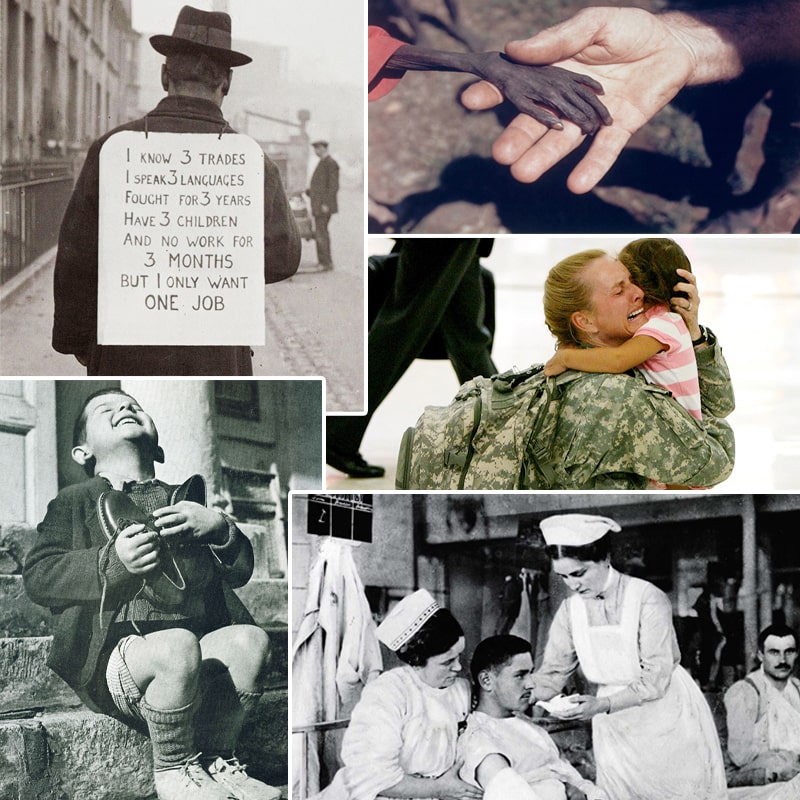
History often feels distant, reduced to dates, names, and events that seem neatly arranged in hindsight. Photographs tell a different story. A single image can capture a split second of courage, heartbreak, joy, rebellion, or pure chance. The people in these pictures had no idea they would one day become part of history, which makes their expressions and actions feel surprisingly real.
This collection brings together remarkable photographs that reveal both famous moments and lesser-known stories. You will see scenes of survival, innovation, protest, love, and resilience. Each image offers a glimpse into a specific moment in time, preserving details that words alone could never fully capture.
The Swimsuit That Sparked an Uproar
Say hello to Annette Kellerman, an Australian swimmer and actress who turned heads in the early 1900s. In 1907, she was arrested at Revere Beach in Massachusetts for stepping out in a bold, one-piece swimsuit. At the time, women were expected to swim in heavy, modest outfits that covered nearly everything.
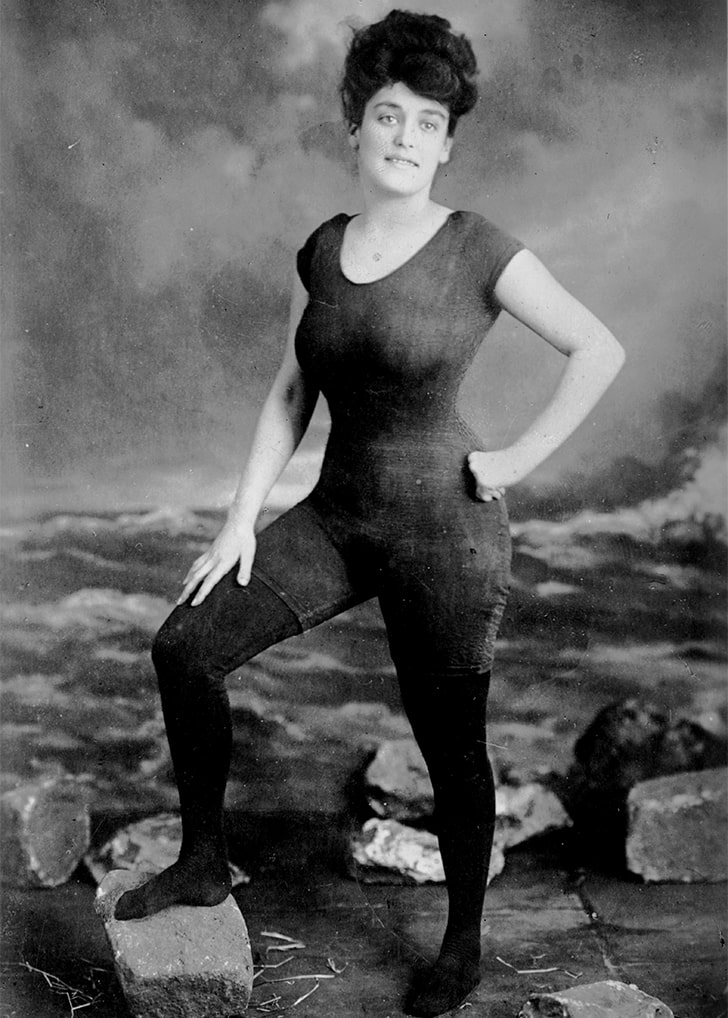
Annette’s sleek, body-hugging suit was widely seen as outrageously improper. Reactions were split. Some onlookers were scandalized, while others respected the practicality and nerve it took to wear it. Kellerman maintained that the design made sense; it gave her the freedom to move and was better suited to actual swimming.
An Unexpected Victorian Photo Moment
Victorian portraits are famously stern, as if smiling for the camera was not done. Then you come across this: a four-panel image of a couple breaking into laughter between poses. It is a reminder that even in the Victorian era, people could be playful.
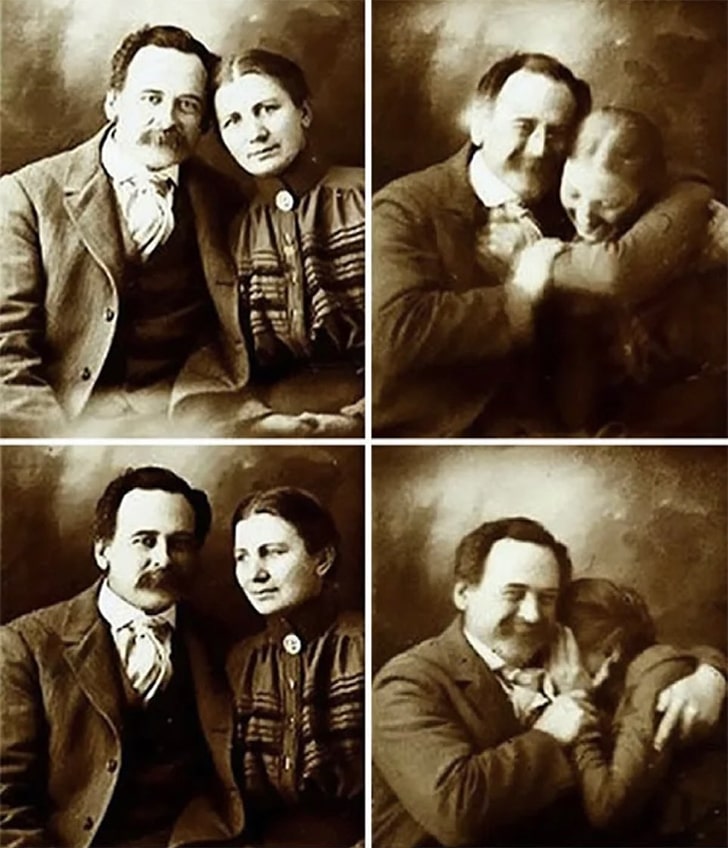
At the time, having your photograph taken was a formal event. Early processes required long exposure times and very little movement, which helped produce those rigid, unsmiling expressions. The first widely used photographic method, the daguerreotype, appeared in 1839. Images were uncommon and costly, so sitters aimed for a composed, dignified look. That is what makes this set of frames stand out; it feels like a rare Victorian outtake.
Cinema’s Enduring Icon
Sophia Loren, Italy’s most recognizable screen siren, lit up the movies at the height of her career. She rose to international prominence in the 1950s and 1960s, drawing audiences with a striking presence and formidable skill.
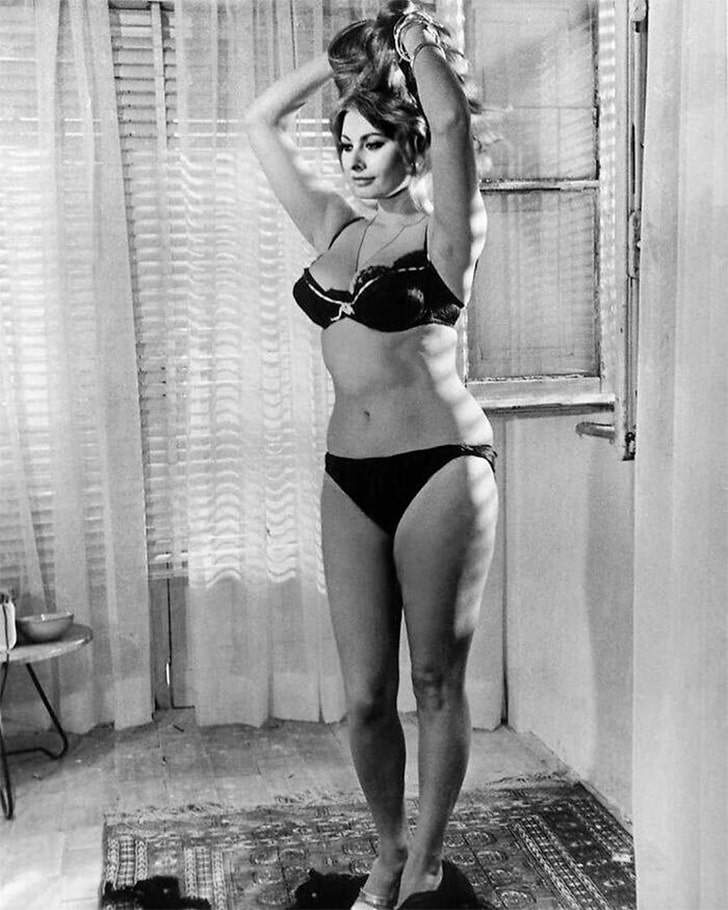
She earned the Academy Award for Best Actress for Two Women (1960), becoming the first performer to win an Oscar for a role delivered in a foreign language. With two Oscars and five Golden Globes, her record reflects both longevity and range. The American Film Institute has also listed her among the 25 most significant female movie stars in history.
Hollywood’s First Backless Sensation
Vikki Dougan, an often-overlooked model of the 1950s, drew widespread attention for her daring backless gowns. In this well-known photograph by Ralph Crane, she walks with assurance, attracting attention and challenging the fashion expectations of the day.
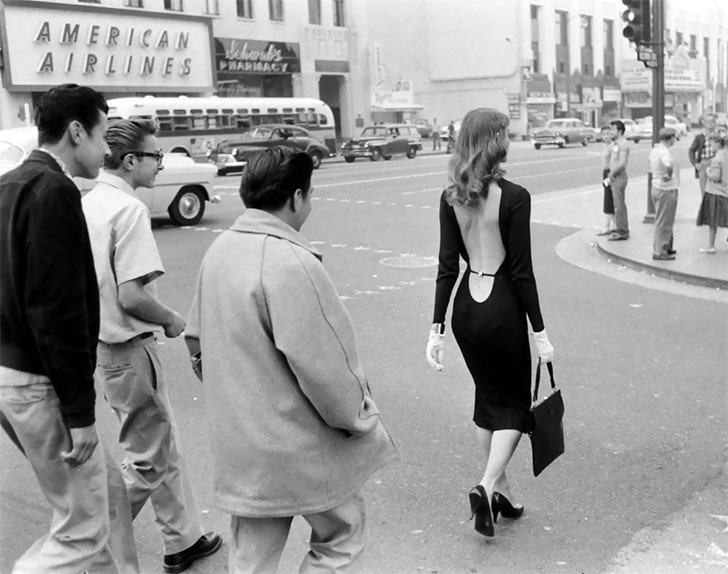
Backless looks are now a familiar part of American style, but Dougan helped bring them into the spotlight at a time when mainstream clothing leaned conservative. Her career peaked in the late 1950s, and she became known for provocative wardrobe choices and high-profile appearances. Hollywood nicknamed her The Back, a label that reflected her distinctive look and confident persona, which set her apart in the modeling world.
The Day Iranian Women Filled the Streets
Tehran saw one of its first major post-revolution confrontations in March 1979, when thousands of women marched after Ayatollah Khomeini said women should observe Islamic dress rules in government offices. The timing gave the protest extra force, arriving around International Women’s Day and only weeks after the revolution.
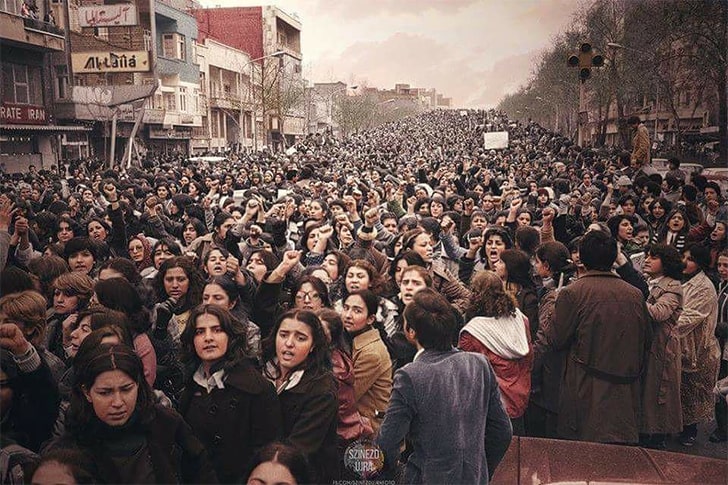
The compulsory hijab system developed more fully in the years that followed, but this photograph captures an early turning point. Women were already pushing back against new limits on dress, work, and public life. Their signs, crowds, and urgency made the image an early record of resistance that still feels politically alive today.
Auschwitz Numbers That Nearly Matched
In this image, three older men hold out their Auschwitz concentration camp tattoos for the camera. Walter and Werner were processed at Auschwitz on the same day, assigned numbers just ten apart: A1828 and A1838. It is a striking coincidence. The third man displays his own tattoo as well, standing with them in a rare moment of shared survival.
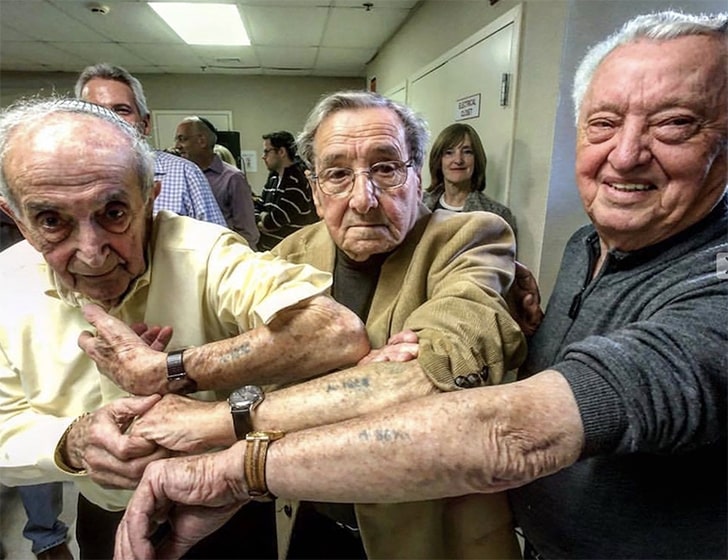
Auschwitz-Birkenau, notorious for the atrocities committed there, operated from 1940 to 1945 and saw more than 1.1 million people killed. The photo appears to have been taken at a Holocaust memorial gathering, where survivors come together to remember what they endured and to honor those who did not survive.
David Bowie and Iman: A Modern Love Story
David Bowie, the iconic musician celebrated for his shape-shifting personas and songs like Space Oddity, found an equal in Iman, the Somali supermodel who made a major mark on the fashion world. They first crossed paths at a dinner party in Los Angeles in 1990, and Bowie was immediately taken with her.
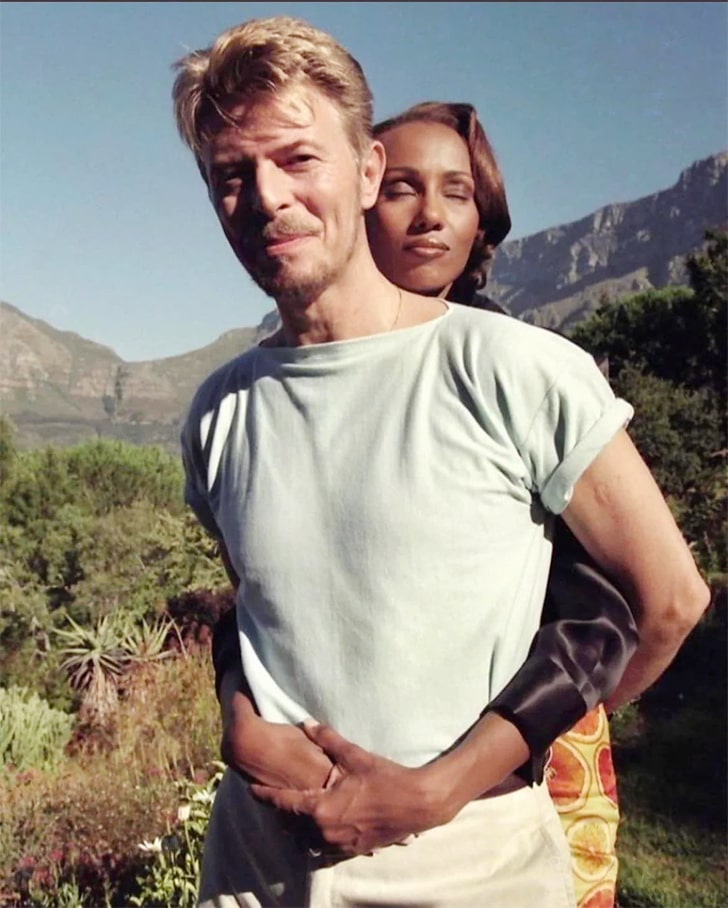
They started seeing each other soon after, but kept the relationship quiet for roughly two years, choosing to protect their time together from public attention. Bowie and Iman married on April 24, 1992, in a private ceremony in Switzerland, then marked the occasion with a more elaborate celebration in Florence.
The Woman Behind Apollo’s Code
Margaret Hamilton was the software engineer whose work helped power NASA’s Apollo missions. In this well-known 1969 photo, she stands next to a towering stack of code, printed out from the programs she and her team developed.

This is not a staged gimmick; those pages represent the software that supported the moon landing. Hamilton led the software engineering effort at MIT’s Instrumentation Laboratory, where her team built the onboard flight software used for Apollo 11. That work helped ensure Neil Armstrong and Buzz Aldrin could complete their mission and take their first steps on the lunar surface.
A Young Activist in the Making
Long before presidential campaigns and Senate speeches, Bernie Sanders was a student activist in Chicago. This 1963 photograph shows his arrest during a protest against segregation in the city’s public schools, including the temporary classroom units critics called Willis Wagons.
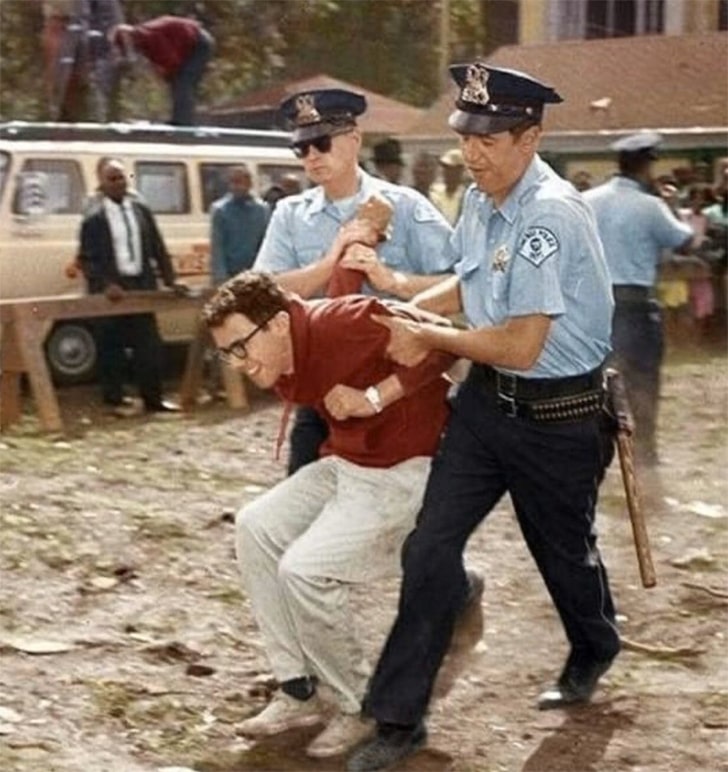
Sanders was studying at the University of Chicago at the time, and the demonstration was part of the city’s local civil rights fight. He was charged with resisting arrest and later fined $25. The photograph offers a revealing look at his early activism, years before he became Vermont’s U.S. Senator and a national figure in progressive politics.
Love, Captured on Camera
This striking image from the book A Photographic History of Men In Love, 1850s-1950s offers a window into an era when relationships like this were kept out of public view. The two men pose with a sign that reads “Not Married But Willing to Be,” a quiet, affectionate snapshot of love that, at the time, was widely treated as forbidden.
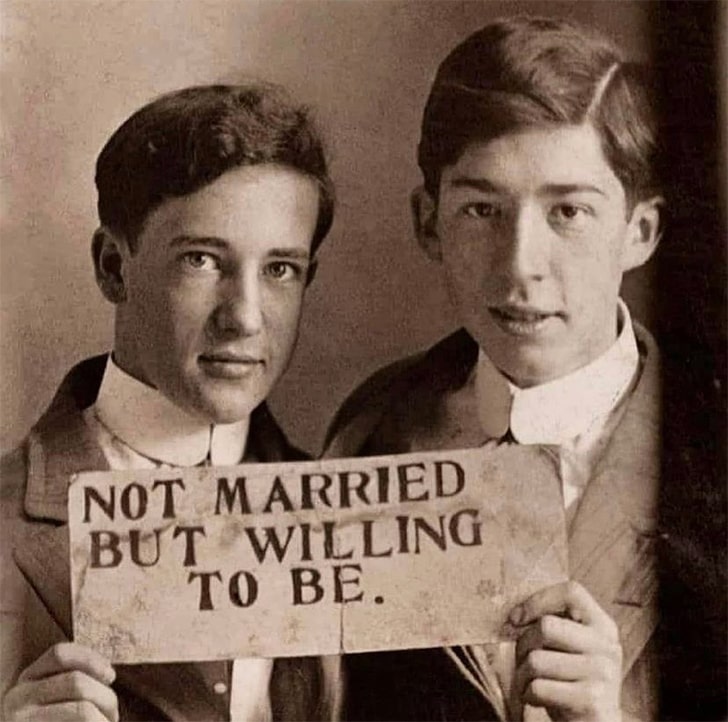
In that period, penalties for gay relationships could be severe, including fines, jail time, and lasting social exclusion. It was not until June 2015 that same-sex marriage became legal nationwide in the United States, following the Supreme Court’s decision in Obergefell v. Hodges. Before that ruling, many states enforced their own bans and limits.
Where Spikes and Smiles Cross Paths
Who says punk rockers cannot have a soft side? This striking photo shows a young man in full punk gear kneeling to meet a curious little boy, who cannot resist reaching out to feel the spikes on his leather jacket.
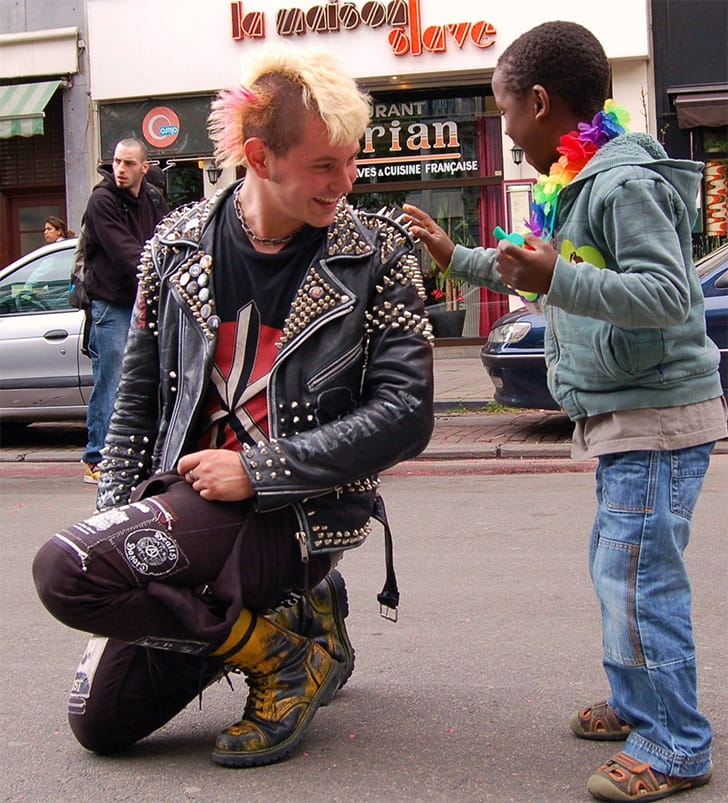
Captured at a Pride event, the scene undercuts the snap judgments people often make based solely on looks. Pride events, held each year in June, celebrate diversity, love, and acceptance. Punk, which took shape in the 1970s, centered on rebellion and individuality, values that closely echo the spirit of Pride.
A Love Story Off the Beaten Path
This timeless snapshot captures Dolly Parton and Carl Dean, a Nashville romance with staying power. Dolly, the country superstar behind songs like Jolene and 9 to 5, found her partner in Carl Dean, a personable man who has always preferred a quiet life.
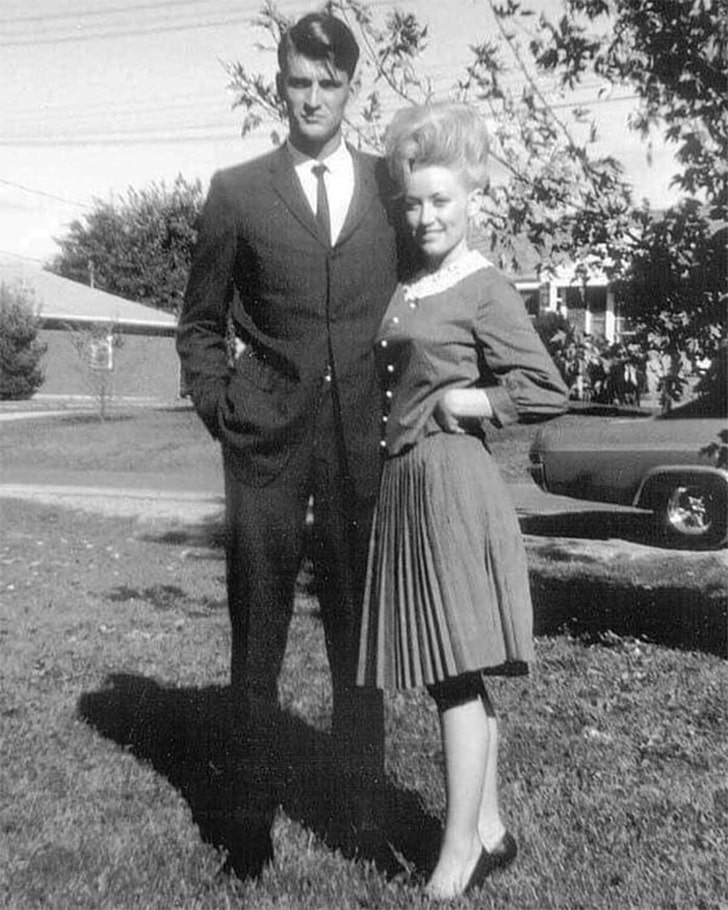
Their story began outside a Nashville laundromat in 1964, an unexpectedly memorable first meeting. Carl was immediately taken with her, and they began dating soon after. What sets their relationship apart, especially by entertainment-world standards, is how firmly Carl has remained out of public view while Dolly built a global career. They married in a small, private ceremony on May 30, 1966.
Budapest’s Shoes Remember the Lost
Along the Danube River in Budapest, a row of shoes creates a stark, unsettling scene. The cast-iron footwear marks the memory of thousands of Jews murdered by fascist Arrow Cross militiamen during World War II.
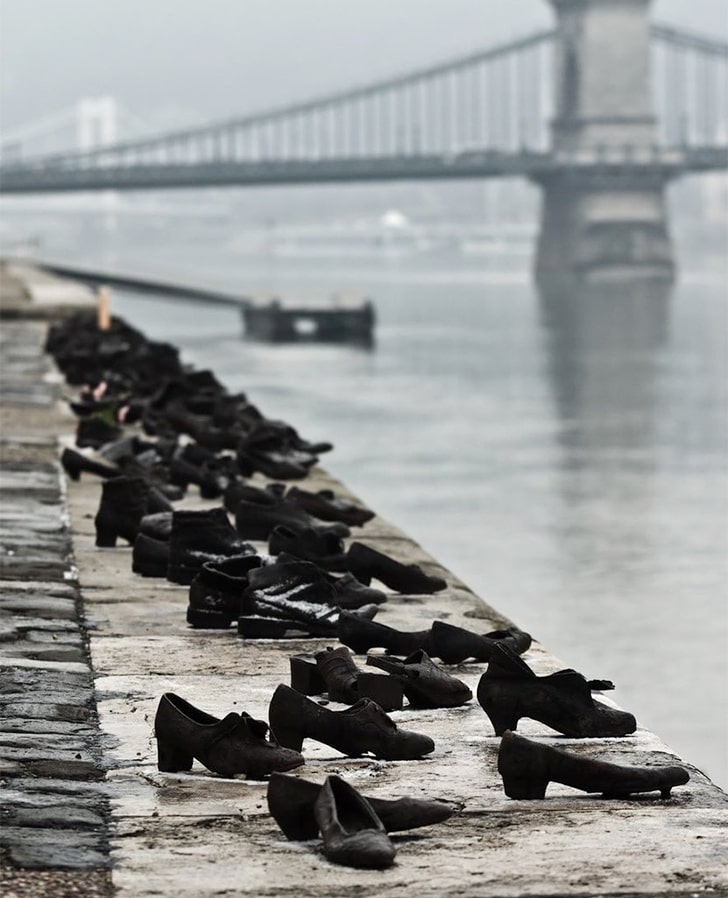
Victims were ordered to take off their shoes before being shot, then their bodies were left to fall into the river, a grim record of deliberate cruelty. Installed in 2005 by sculptor Gyula Pauer and director Can Togay, the memorial stands as a clear warning about the consequences of hatred and a call to remember what happened.
Compassion in the Middle of Conflict
Gunfire and panic surround this 1962 photograph, but its focus stays on one kneeling priest. Chaplain Luis María Padillo is shown giving comfort and last rites to a wounded loyalist soldier during a Venezuelan military revolt in Puerto Cabello.
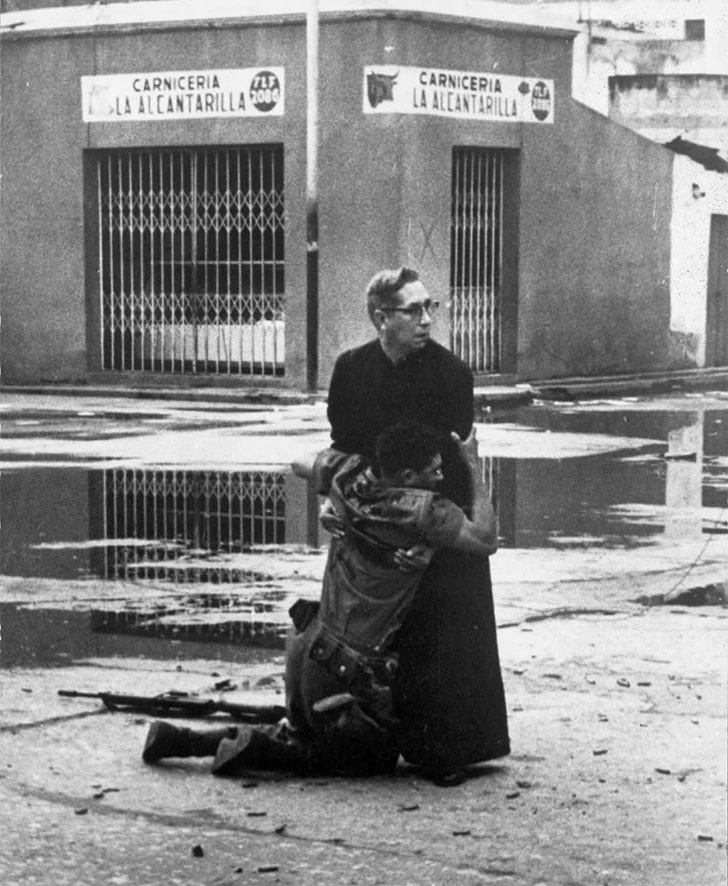
The uprising was El Porteñazo, a rebellion against President Rómulo Betancourt. Photographer Héctor Rondón Lovera captured the moment as violence unfolded around them, and the image later won the 1963 Pulitzer Prize. Its power comes from the contrast: political chaos fills the background, while the center of the frame holds one small act of care under terrifying pressure.
Nurses Who Held the Line in WWI
During World War I, German Red Cross nurses, like the group pictured in this 1915 photograph, were vital to frontline medical care. In conditions defined by danger and uncertainty, these women worked long, demanding shifts, often 14 to 16 hours a day, treating wounded soldiers.
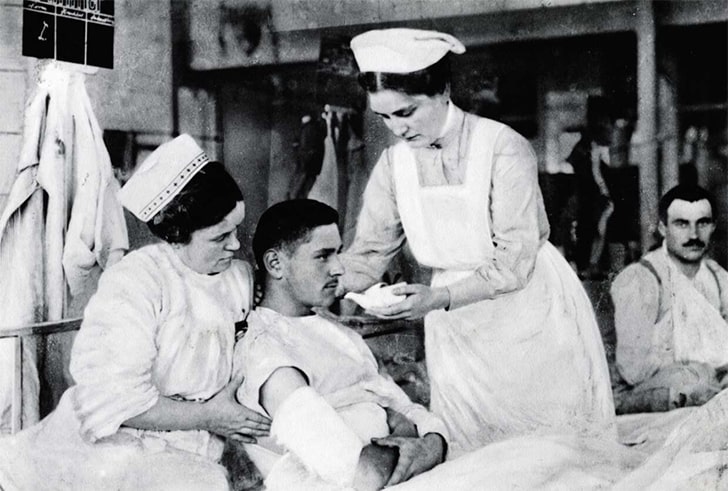
World War I also marked an early turning point for modern medicine, with large-scale adoption of new practices and technologies, driven in part by the steady work of nurses. The conflict’s toll was severe, leaving millions injured and many more dead. Even in that harsh reality, these nurses stayed focused, delivering critical treatment and, for many patients, a measure of reassurance.
From Sunny Beach Days to a Grim Reality
This photograph shows sisters Anne and Margot Frank enjoying an easy, carefree day at the beach, unaware of what lay ahead. The Frank family was living in the Netherlands, and that ordinary life was upended in 1942 as Nazi persecution of Jews escalated.
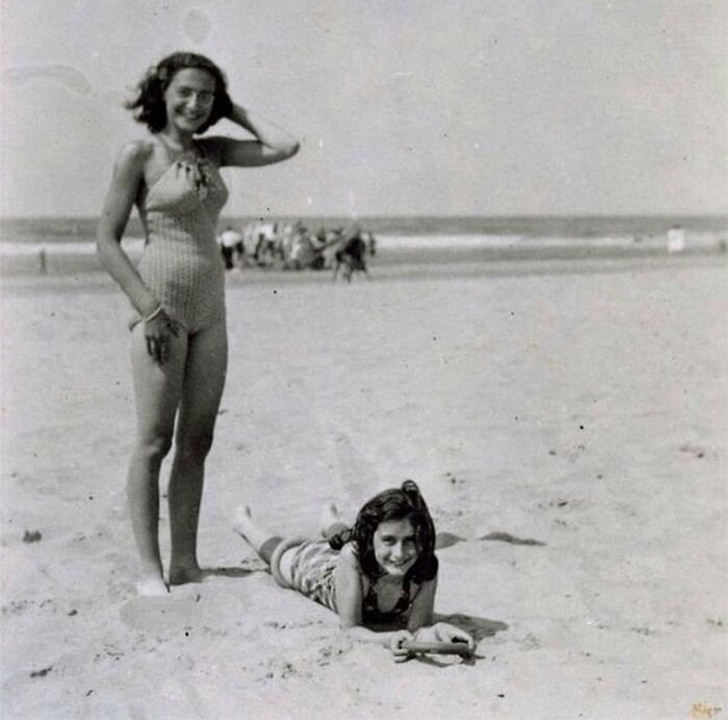
After being forced into hiding in a concealed annex behind their father’s workplace, the family spent two years living under constant threat. Their hiding place was eventually discovered, and they were deported first to the Westerbork transit camp and then to Auschwitz. Anne’s diary, The Diary of a Young Girl, later became a lasting record of her experience and a widely recognized account of life under persecution.
Two Smallpox Cases, One Striking Contrast
This image juxtaposes two children affected by smallpox, a feared virus that afflicted humanity for centuries. The boy on the left, who was not vaccinated, is covered with the telltale pox lesions; the boy on the right, vaccinated, has clear skin. Smallpox was highly contagious and often fatal, causing millions of deaths over the course of history.
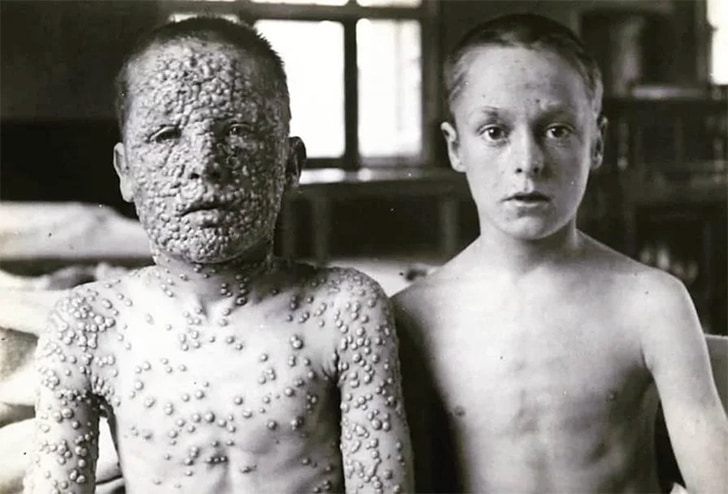
A breakthrough occurred in 1796, when Edward Jenner developed the first effective vaccine by using cowpox to confer immunity. With coordinated vaccination campaigns worldwide, smallpox became the first human disease to be eliminated, and the World Health Organization (WHO) formally certified its eradication in 1980.
Filled to Capacity
The RMS Queen Elizabeth became one of the great troop carriers of World War II, moving huge numbers of American soldiers across the Atlantic. At more than 1,000 feet long, the former luxury liner could carry about 15,000 troops during wartime service.
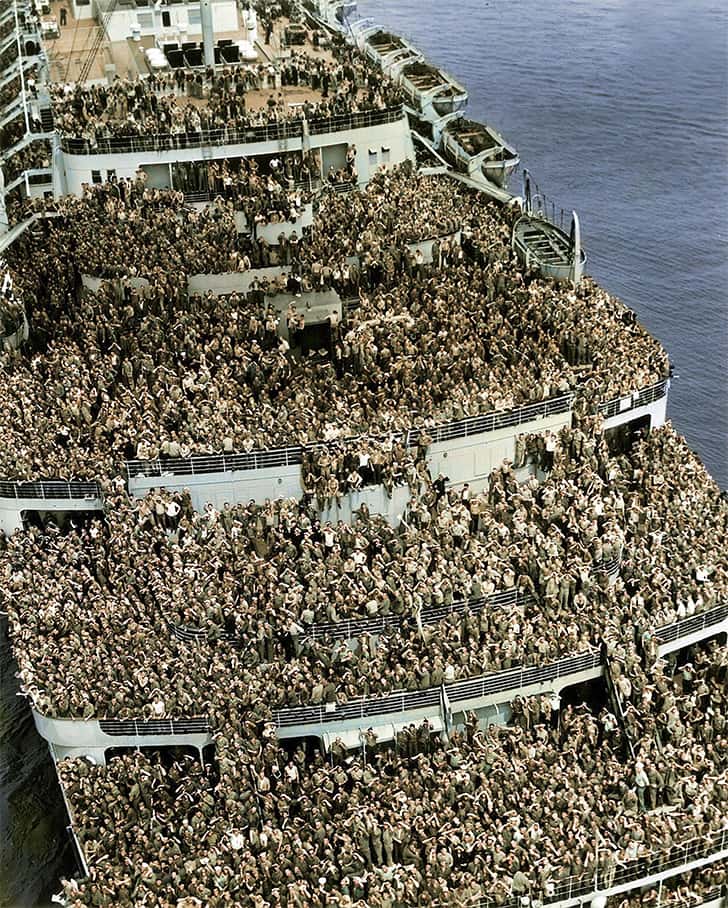
Launched in 1938, the ship entered wartime duty before beginning its later commercial passenger career. Packed decks made the vessel a vivid image of mass military movement, especially near the war’s end, when soldiers crossed between combat, uncertainty, and the long-awaited possibility of home again. Its size and speed made it one of the Allies’ most valuable transport ships.
He Took Surgery Into His Own Hands
When people talk about ambitious DIY projects, they usually mean home repairs, not removing their own appendix. But that is exactly what Soviet surgeon Leonid Rogozov did. In 1961, while stationed in Antarctica, he developed clear symptoms of appendicitis and had a stark choice: operate on himself or risk dying.
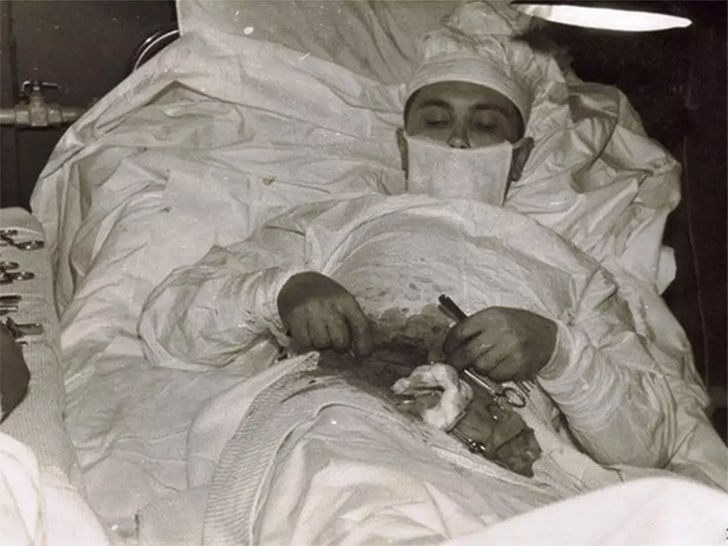
With no possibility of evacuation or another doctor on site, he prepared for surgery himself, sterilized the instruments, and began operating on his own abdomen. He also briefed his teammates on what to do if he lost consciousness, ensuring someone could step in if needed. The procedure succeeded, and Rogozov survived the ordeal.
School Days Before Internment
Dorothea Lange’s photograph of children at a San Francisco school captures an ordinary moment of youthful friendship. Yet it was taken against the backdrop of one of the bleakest periods in U.S. history. After Japan attacked Pearl Harbor in 1941, President Franklin D. Roosevelt signed Executive Order 9066, setting in motion the forced removal and incarceration of Japanese Americans.
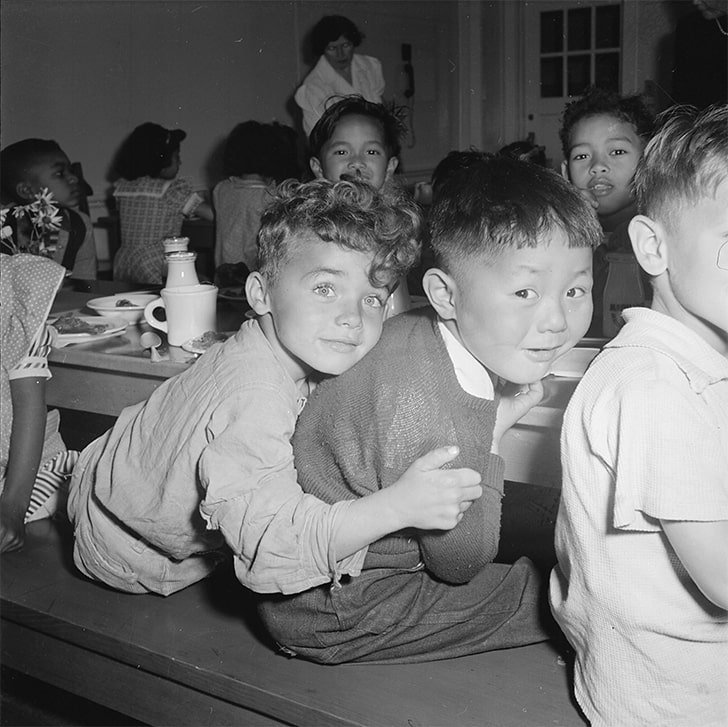
Not long after this image was made, these children were among those compelled to leave their communities for internment camps. From 1942 to 1945, more than 120,000 Japanese Americans, including thousands of children, were confined in these facilities, often in severe conditions, and many lost their homes, businesses, and sources of income.
The Rescue That Froze Time
Known as the Kiss of Life, this striking photograph freezes the instant utility worker J.D. Thompson rescues his co-worker, Randall Champion, after a 4,000-volt shock leaves him unconscious. Thompson immediately began mouth-to-mouth resuscitation as Champion hung from his safety harness on the utility pole.
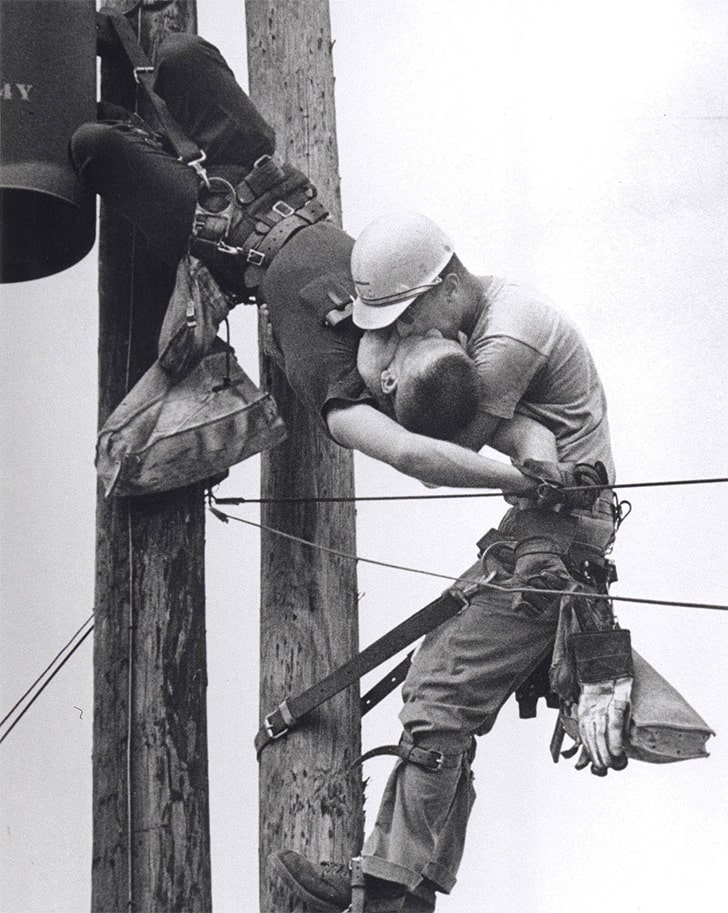
Photojournalist Rocco Morabito documented the rescue in 1967, a shot that went on to win the Pulitzer Prize for Spot News Photography. Champion survived the incident and lived another 35 years, underscoring how Thompson’s fast response and composure made the difference.
Resilience and Heritage
This image shows a Navajo mother gently shielding her two small children, a quiet portrait of the endurance often associated with Native American life. Native peoples, including the Navajo, have cultures and histories that stretch back thousands of years, shaped by strong community ties, vibrant oral storytelling, and a lasting relationship with the land.
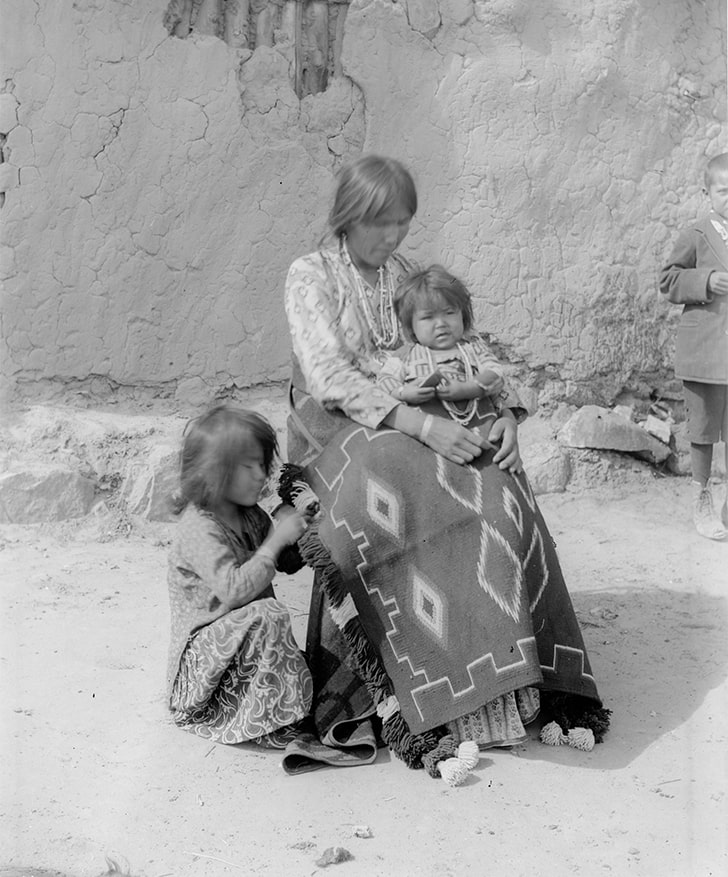
During the early 20th century, Native Americans endured severe pressures, including forced relocation, efforts to suppress their cultures, and widespread economic hardship tied to federal policy. Measures such as the Dawes Act of 1887 were designed to push assimilation by breaking up communal lands into individual allotments, a process that resulted in major losses of Native territory.
Relief After the Unthinkable
This striking image captures the unmistakable relief of Jewish prisoners as they are freed from Nazi extermination camps. The photograph dates to 1945, when Allied forces advanced across Europe and liberated people who had survived years of extreme brutality.
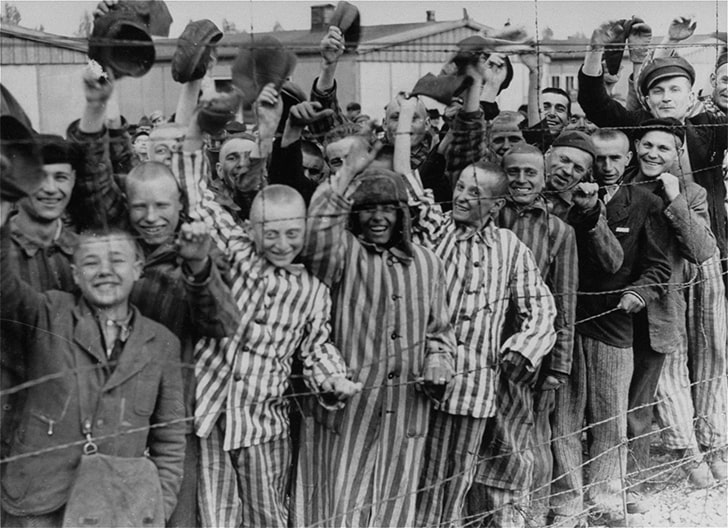
From 1941 to 1945, roughly six million Jews were murdered as part of the Holocaust, with only a small fraction surviving the camps. When liberation came, many were severely malnourished and physically depleted, and it often took weeks or even months before they recovered enough strength to begin rebuilding something resembling normal life.
Defining the Boston Marathon Run
In 1967, Katherine Switzer made history by becoming the first woman to officially run the Boston Marathon, despite the race still being restricted to men. Wearing bib number 261, she registered as “K.V. Switzer” to keep her entry from being questioned.
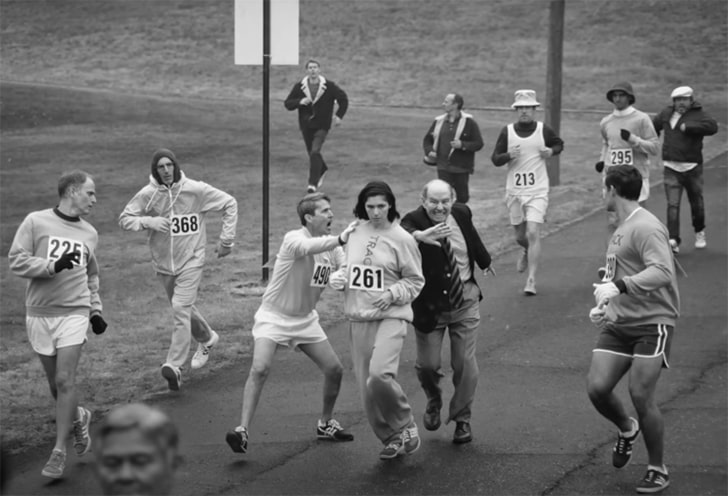
Partway through the race, official Jock Semple attempted to pull her off the course physically, but her boyfriend and nearby runners stepped in, and Switzer went on to finish. Her decision to run drew major public attention and became a turning point in the fight against gender barriers in sport. The moment helped push marathon policies forward, and in 1972, the Boston Marathon officially opened the race to women.
WWII’s Daring All-Female Soviet Air Unit
In World War II, a group of young Soviet women, later nicknamed the Night Witches, broke with convention and went to war in the air against Nazi Germany. Established in 1942, the 588th Night Bomber Regiment was composed entirely of female pilots and navigators, tasked with high-risk nighttime bombing raids against German positions.
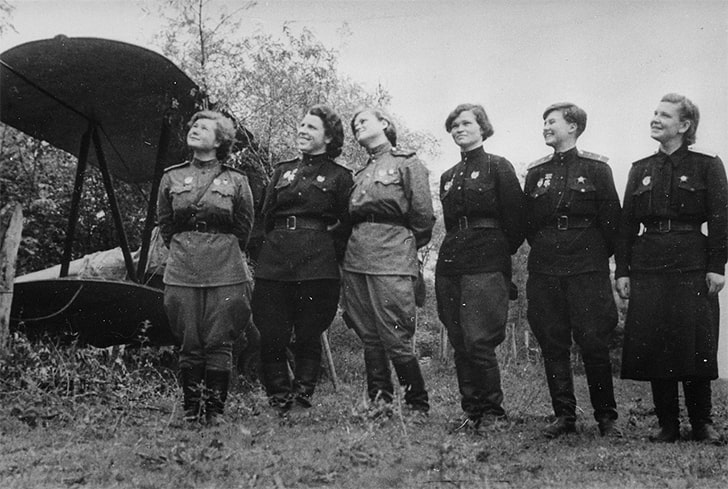
They flew obsolete, loud Polikarpov Po-2 biplanes that left them vulnerable to enemy fire, yet they still carried out more than 23,000 sorties and delivered over 3,000 tons of bombs. The results were substantial, creating a serious disruption for German forces.
Australian POWs Share Tea After Liberation
This striking 1945 photograph captures five Australian prisoners of war, newly freed after surviving the brutal reality of Japanese labor camps during World War II. In the image, they pause to enjoy a cup of tea, a small, ordinary comfort made meaningful by years of deprivation.
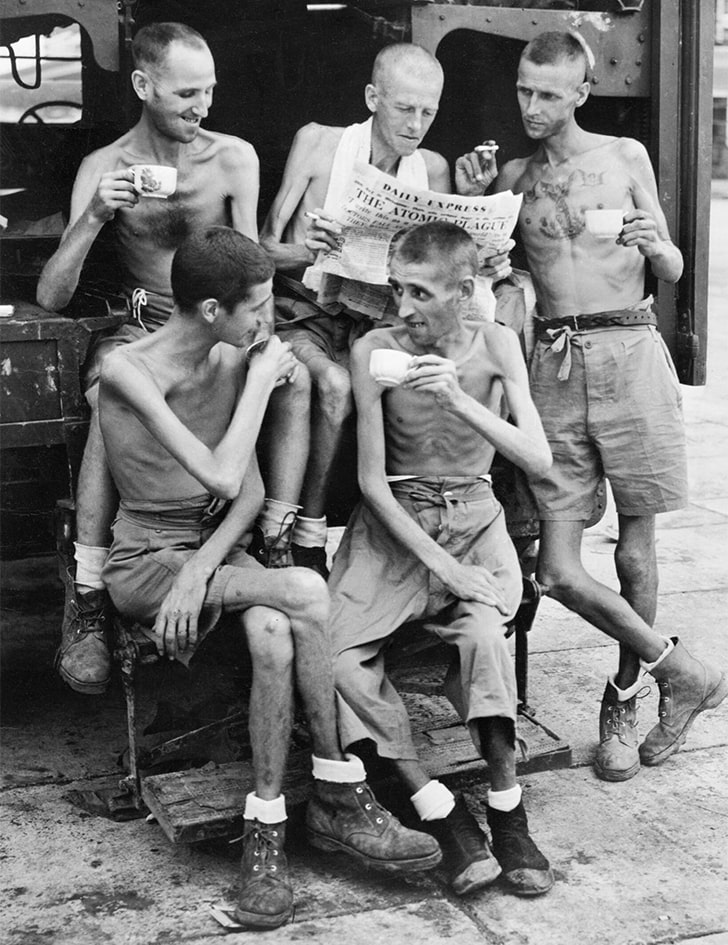
In captivity, the men were subjected to severe dehumanization and compelled to work punishing hours in harsh conditions, often with too little food and minimal medical attention. Illnesses such as malaria and dysentery were widespread, and many prisoners did not survive.
A Gesture of Hope
In 1980, Uganda’s Karamoja region endured one of the most devastating famines of the era, a crisis that claimed thousands of lives, especially among children. This well-known photograph by photojournalist Mike Wells starkly captures the contrast between a child’s fragile hand and an aid worker's hand.
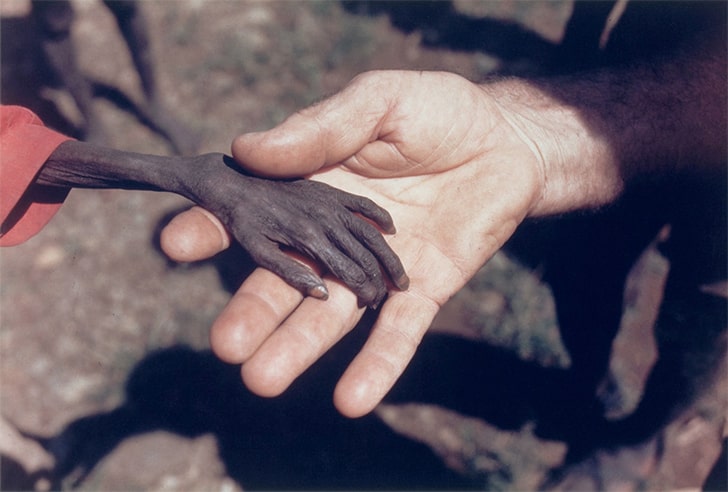
Wells took the picture in April 1980; it went on to win the World Press Photo of the Year in 1981 and helped focus international attention on the scale of the humanitarian emergency. Even with the recognition, he expressed mixed feelings about its acclaim, saying he did not want to be praised for an image rooted in such profound suffering.
Hidden Love in an Unforgiving Era
This intimate photograph preserves a quiet moment between two women, a bold and uncommon show of affection in the early 1900s. At the time, lesbians faced intense social stigma and were often compelled to keep their relationships out of public view.
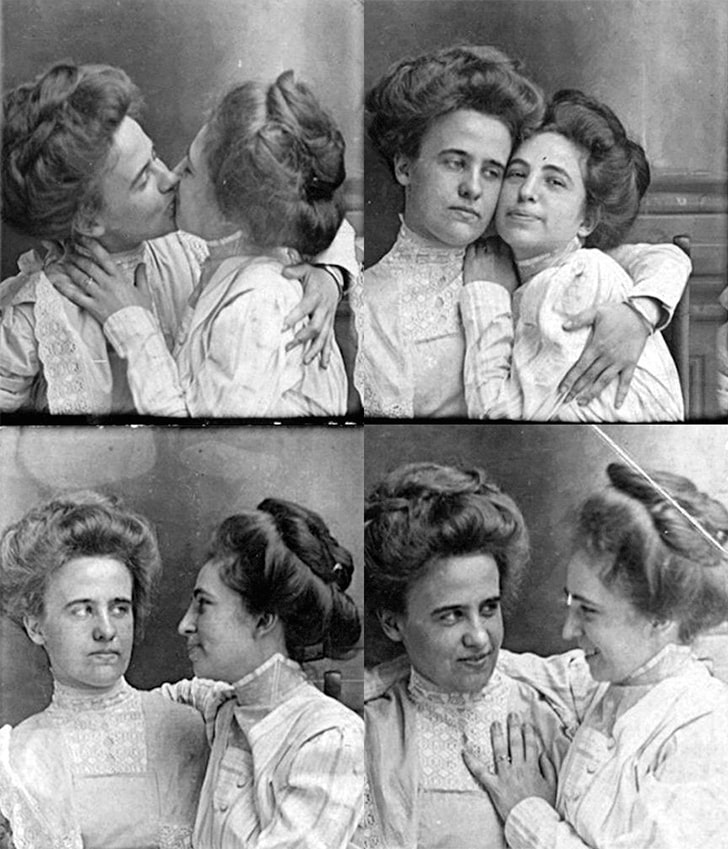
In both the United Kingdom and the United States, lesbian relationships were widely treated as taboo, and many women had to manage their personal lives in secrecy. Legal recognition arrived much later, with same-sex marriage becoming lawful in 2014 in the UK and 2015 in the US, major milestones in the broader history of LGBTQ+ rights.
A Photo Booth Secret from the 1930s
In this intimate photo booth snapshot, two men hold each other close, a striking gesture for its era. In the early 1930s, showing that kind of affection in public was widely considered impossible, as gay people in Canada faced intense discrimination and the threat of legal consequences.
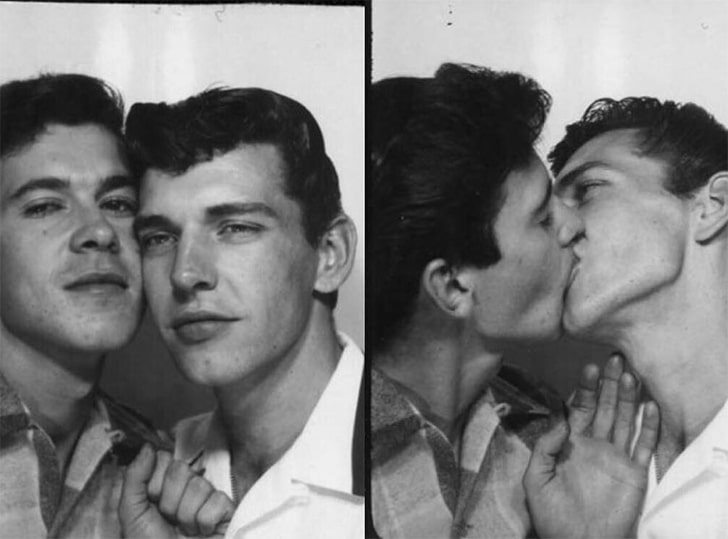
Same-sex relationships were treated as criminal acts, and people convicted could face prison or coercive “treatments.” Change came gradually over the decades, and in the late 20th century, momentum accelerated, leading to Canada becoming the fourth country to legalize same-sex marriage on July 20, 2005.
Innocence Confronting Hate
In this photograph, a white child in Ku Klux Klan robes gazes with childlike curiosity into the shield of a Black state trooper. The Ku Klux Klan, a white supremacist organization formed in 1865, promoted hatred and violence toward African Americans, Jews, Catholics, and other minority groups.
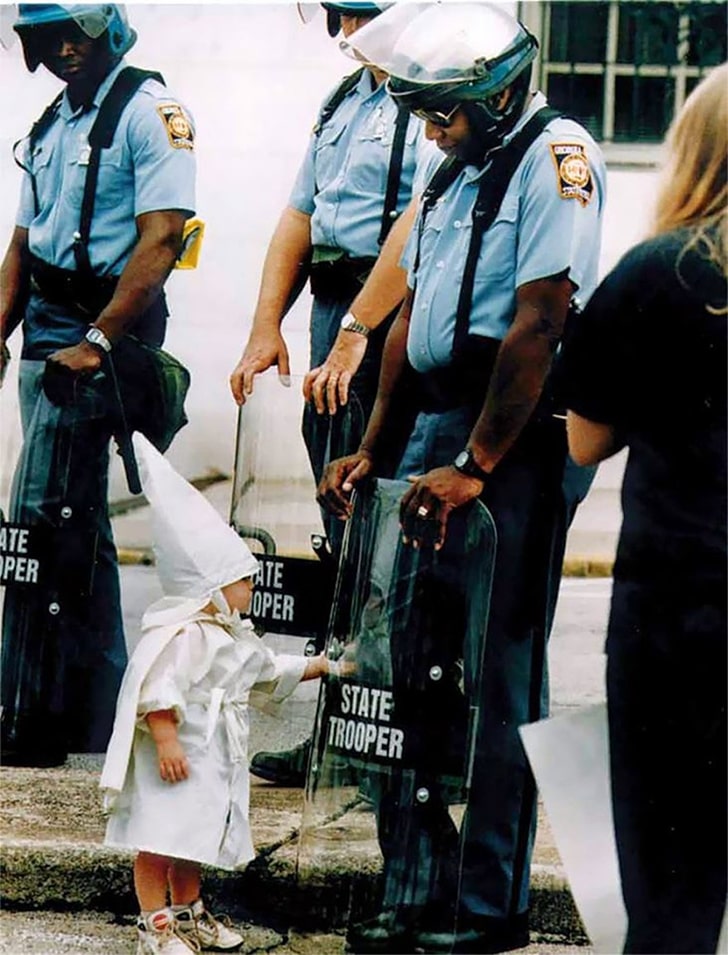
The group gained influence during Reconstruction and resurfaced in later waves, notably in the 1920s and again through the civil rights era, advancing a message of racial “purity” through intimidation, lynchings, and public rallies. High-profile attacks, including the 1963 bombing of the 16th Street Baptist Church, underscored the Klan’s violent extremism.
Affection and Aftermath
Freddie Mercury, Queen’s celebrated frontman behind era-defining songs such as Bohemian Rhapsody and We Are the Champions, also had a private life that drew plenty of attention. Before he publicly acknowledged he was gay, he shared a committed relationship with Mary Austin, shown here with him in an uncommon, unguarded photo.
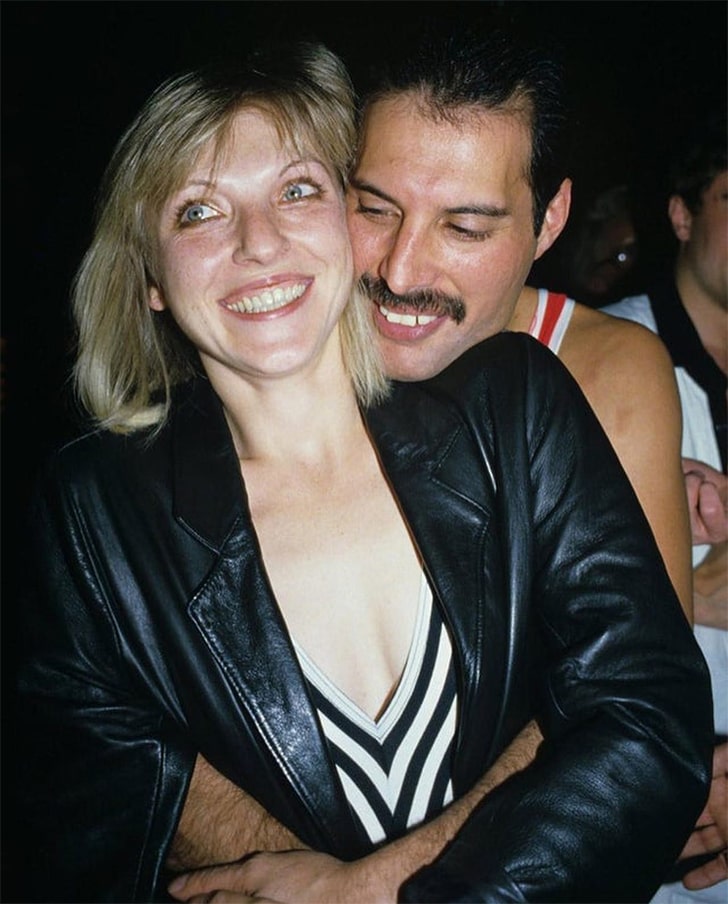
Although their romance ended, Freddie and Mary stayed firmly connected as friends until his death. Mercury died on November 24, 1991. The depth of that bond was reflected in his will, which left Mary the majority of his estate, including his cherished home, Garden Lodge.
Last Look at a Troubled Music Icon
Amy Winehouse, celebrated for her distinctive, soulful sound and songs such as Rehab and Back to Black, became synonymous with extraordinary talent alongside very public fragility. This photo, believed to be the final portrait taken of her while she was still alive, comes from her last performance in Belgrade in June 2011.
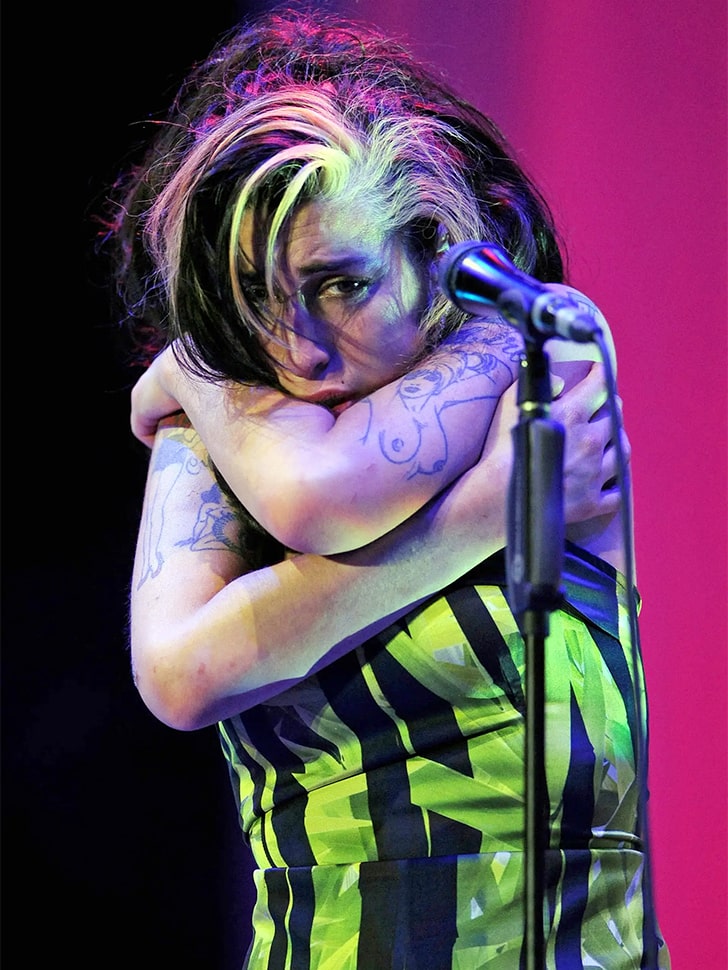
Her rise was repeatedly overshadowed by widely reported addiction issues and personal upheaval, which kept her in the spotlight and frequently under intense media scrutiny. On July 23, 2011, Winehouse was found dead at her home in London; the cause was alcohol poisoning. She was 27.
The Obamas on Their Wedding Day
Barack Obama, who would later become the 44th President of the United States, and Michelle Obama are pictured sharing a lighthearted moment at their wedding. In the photo, Barack is playfully removing Michelle’s garter, a familiar tradition often met with laughter. Taken on October 3, 1992, the image captures the ease of the couple's connection, long before they became known around the world.
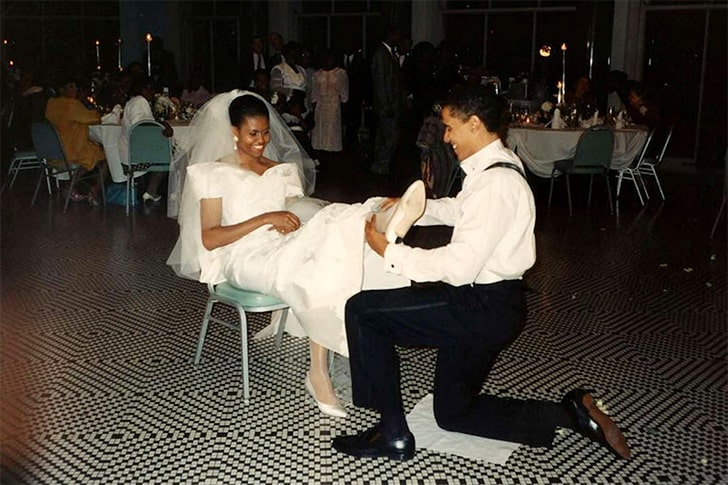
Obama took office in 2009 and served two terms, leaving the presidency in 2017. His administration included major milestones such as the Affordable Care Act and the operation that resulted in Osama bin Laden’s death.
The Crocodile Hunter Meets a Fairy Princess
Steve Irwin, the well-known Australian zookeeper and the face of Animal Planet’s The Crocodile Hunter, built his reputation on fearless wildlife encounters and a big, unmistakable personality. In this moment, with his daughter Bindi dressed in fairy wings and a tiara, Irwin shows a lighter, playful side as he holds a baby crocodile.
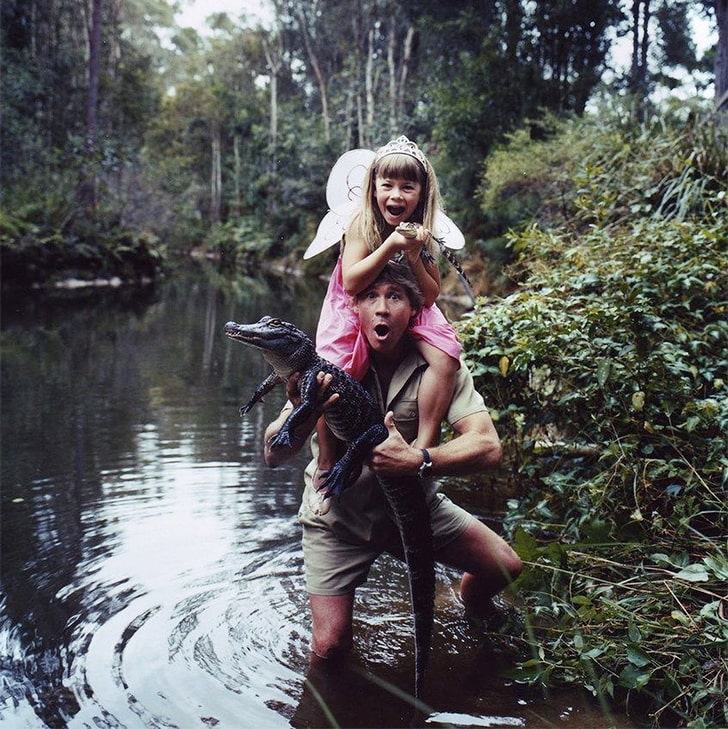
“The Crocodile Hunter” aired from 1996 to 2007 and drew viewers worldwide with Irwin’s energy and clear devotion to animals. He died on September 4, 2006, after a stingray barb struck him while he was filming at the Great Barrier Reef.
Sun, Sand, and Early Ambitions
A young Barack Obama spent a bright beach day splashing in the water with his grandfather, Stanley Dunham. A World War II veteran, Stanley earned a living working as a furniture salesman and later as a security guard. After Barack’s father left, his grandparents stepped in, offering the steadiness and support he needed.
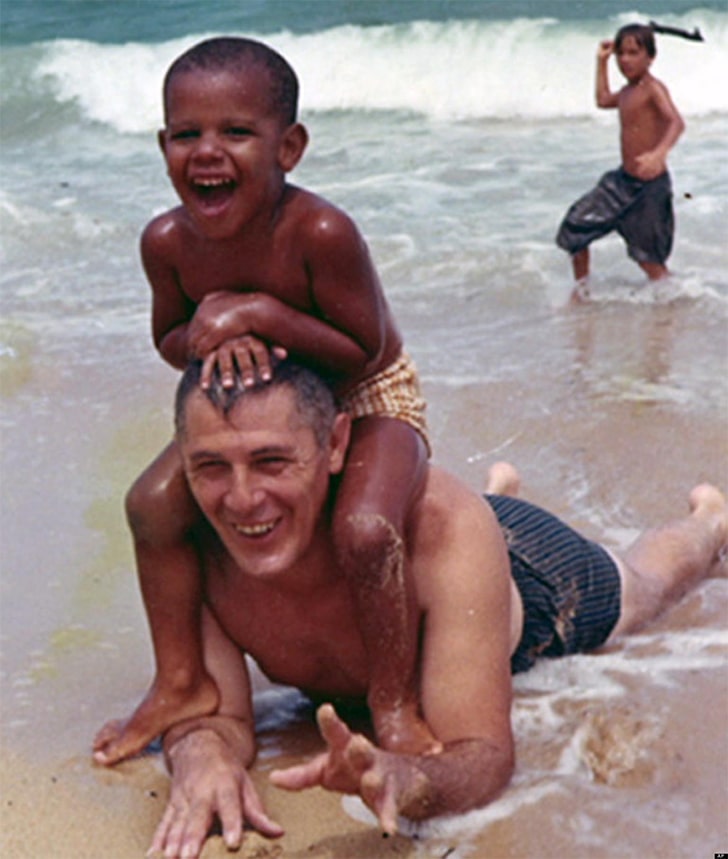
Growing up with them in Honolulu, he experienced an upbringing shaped by both routine and opportunity. Barack attended Punahou School, where he stood out in the classroom and on the basketball court. He later enrolled at Occidental College in Los Angeles, then transferred to Columbia University in New York.
Hepburn and Kelly, a Backstage Oscars Moment
A striking glimpse of Hollywood’s golden age brings together Audrey Hepburn and Grace Kelly, two enduring stars born in 1929. The scene unfolds backstage at an awards ceremony, preserving a chance meeting between two of the era’s most celebrated figures.
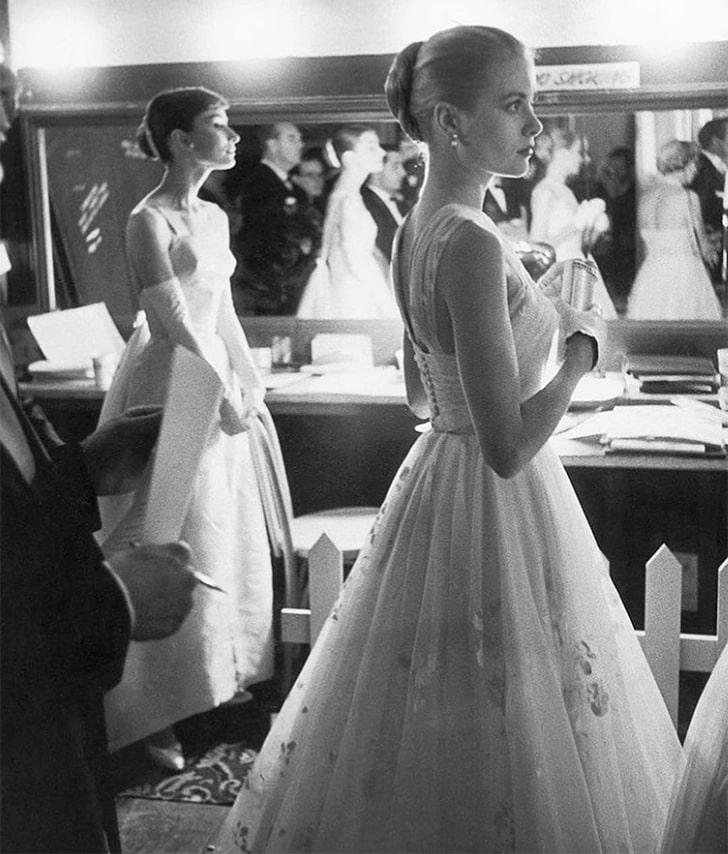
Audrey, celebrated for films such as Roman Holiday and Breakfast at Tiffany’s, won the Academy Award for Best Actress for Roman Holiday in 1953. Grace, acclaimed for roles in High Noon and Rear Window, received her Best Actress Oscar for The Country Girl in 1954. The photo captures an uncommon moment between two remarkable performers, each near the peak of her career.
A Mother’s Return from War
Commander Terri Gurrola is pictured reuniting with her daughter, Gaby, at Atlanta’s airport. After serving as a military physician during the Iraq War, Terri provided critical care on the front lines, helping save numerous lives in combat.
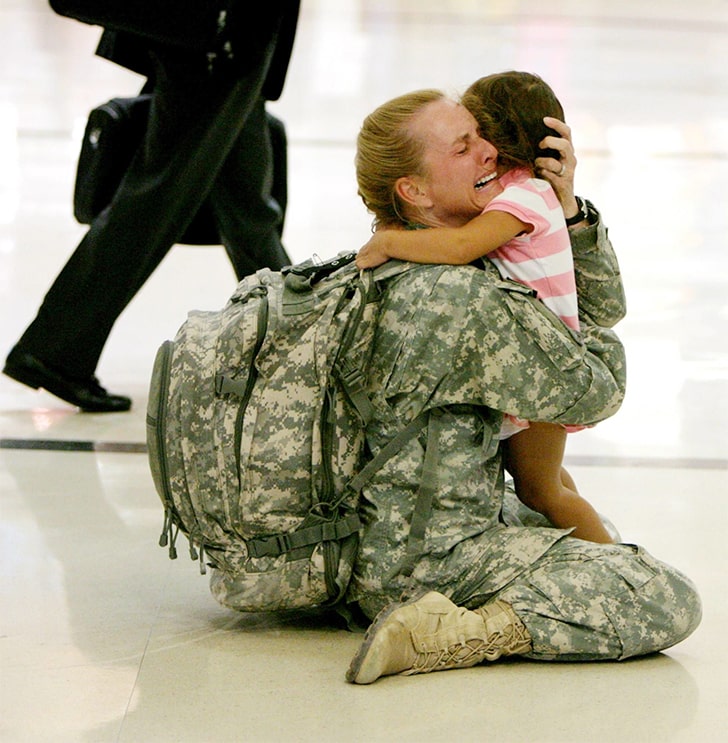
Captured in 2009, the scene highlights the strain military families often face. Long deployments can mean months, and sometimes years, away from home, a separation that weighs heavily on parents and children alike. Terri’s tears reflect the relief of returning, as well as the endurance and sacrifice familiar to many families connected to military service.
Hawking and Jane Before the World Watched
Stephen Hawking first met Jane Wilde at a New Year’s Eve party in 1963. He was already making a name for himself in theoretical physics, and she was studying literature. That same year, Stephen was diagnosed with ALS and was told he likely had only a few years to live, yet their relationship continued to grow.
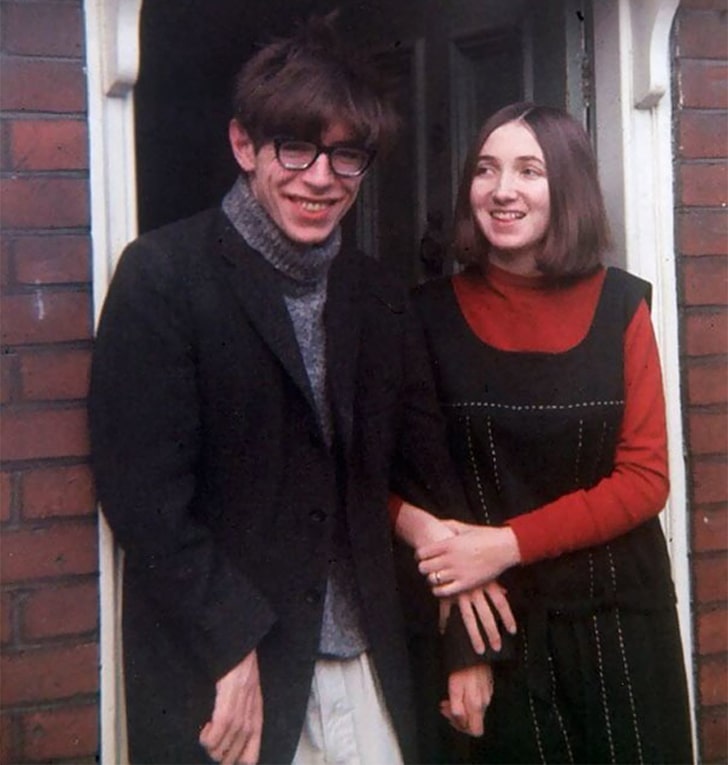
They married in 1965 and went on to have three children, Robert, Lucy, and Timothy. As Stephen’s health worsened and his professional profile rose, Jane remained a steady source of support throughout those years. Their relationship later inspired the 2014 film The Theory of Everything, which received multiple awards.
Rock’s Ultimate Shape-Shifter
Here is a young David Bowie, still performing under the name Davy Jones, years before he would reinvent himself as the legendary Ziggy Stardust. Born David Robert Jones in 1947, he adopted the stage name David Bowie in the late 1960s to avoid being mistaken for Davy Jones of The Monkees.
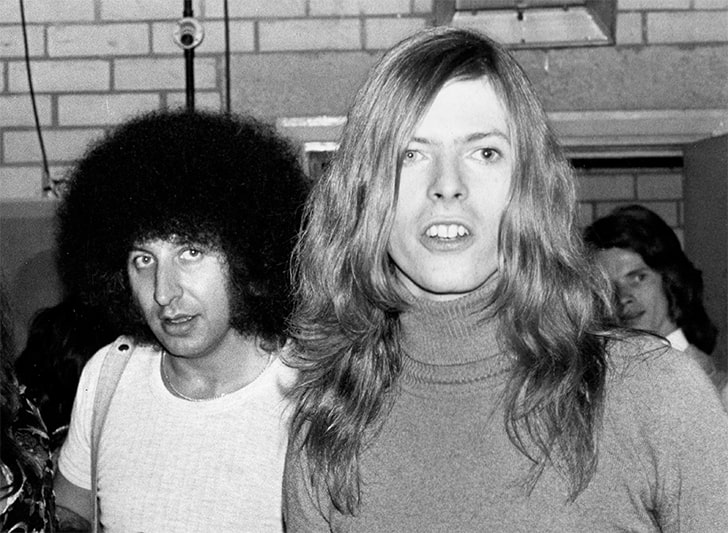
His breakthrough came in the early 1970s with the release of The Rise and Fall of Ziggy Stardust and the Spiders from Mars, which turned him into an international star. Bowie became widely recognized for his distinctive voice, wide-ranging style, and theatrical stage presence.
The Rock Icon and His Feline Favorites
Freddie Mercury, Queen’s iconic frontman, was celebrated for his commanding voice and larger-than-life stage presence. With songs such as Bohemian Rhapsody and We Are the Champions, he became a worldwide name. Away from the spotlight, though, his deepest affection was reserved for his cats.
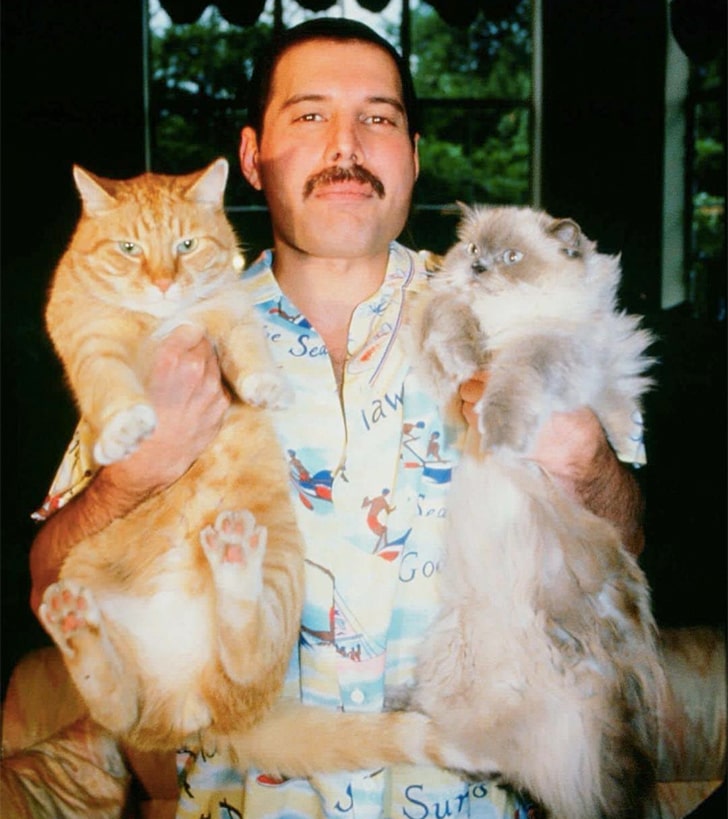
Mercury’s love of cats was well known; at one point, he had ten, and each had its own room at his home. He regularly referred to them as his children and even dedicated his solo album Mr. Bad Guy to them. The photo captures a lighter, more playful moment, with Freddie holding two of his cherished companions.
A Trailblazer Standing Up to Segregation
Dorothy Counts was just 15 years old when she entered the history books in 1957, becoming the first Black student to attend the previously all-white Harry Harding High School in Charlotte, North Carolina. Her decision took courage, and it was met with open, aggressive hostility.
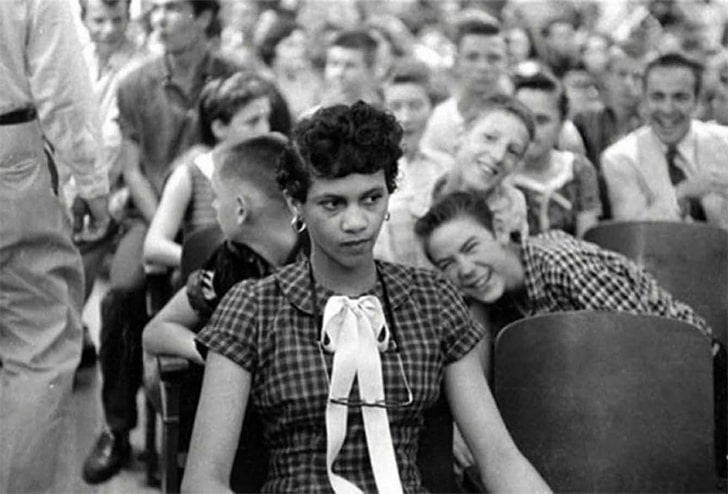
The photograph captures what she faced: classmates jeering and harassing her, a stark reflection of the entrenched racism of the time. Counts’s composure and resolve drew national attention and added momentum to the civil rights movement. Still, major legal progress against racial discrimination did not arrive until 1964, with the passage of the Civil Rights Act.
Lightning’s Leading Man
Nikola Tesla’s Colorado Springs laboratory produced one of the most dramatic portraits in science history. In the famous 1899 image, electrical arcs seem to roar through the room while Tesla sits nearby, calm and almost theatrical.
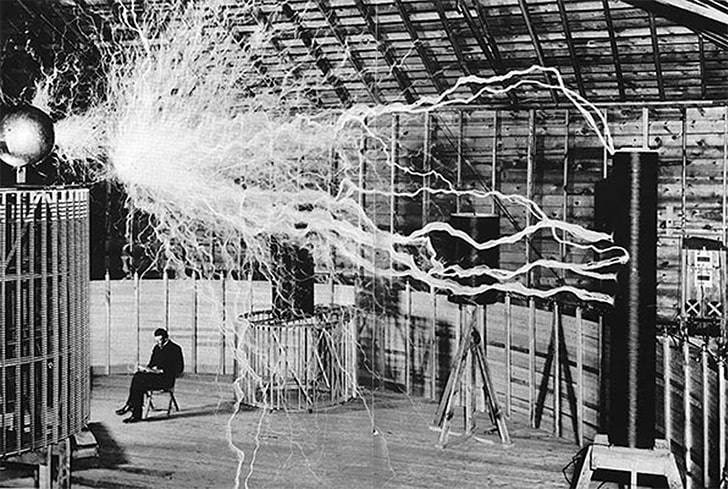
The photograph was made with a technique widely described as double exposure, combining Tesla’s seated pose with the discharge from his equipment. His high-voltage experiments were real, and his work on alternating current helped transform modern electricity. The staged drama helped make the science unforgettable to the public. More than a century later, the image still captures the boldness of his imagination.
A New Pair of Shoes, and a Moment of Relief
Taken in 1946, this photograph captures a young Austrian boy grinning broadly after receiving a new pair of shoes from the Red Cross. Living in an orphanage, he was among the many children shaped by the severe hardships of World War II.
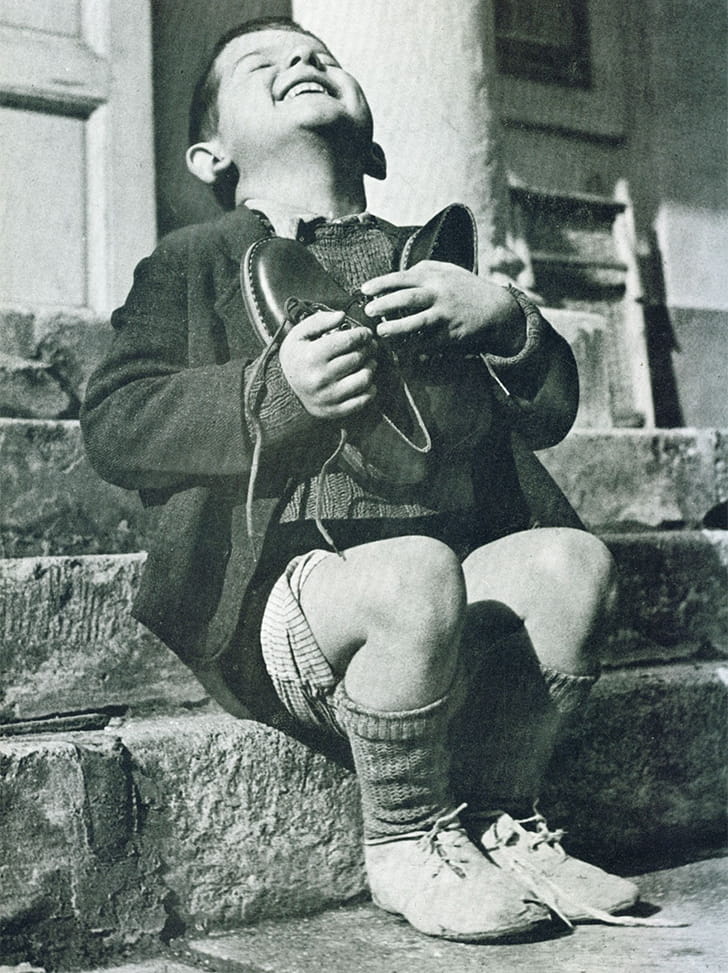
The openness and genuine happiness on his face highlight how small acts of care could still create meaningful flashes of hope in a bleak period. World War II, fought from 1939 to 1945, was catastrophic, causing more than 70 million deaths worldwide. In its aftermath, countless children were left orphaned and facing serious hardship.
A Snapshot of Liberation
Relief does not look simple in this 1945 photograph. The faces in the railcar show exhaustion, shock, and disbelief as Jewish prisoners realize they have been freed from a Nazi transport train near Farsleben, Germany.
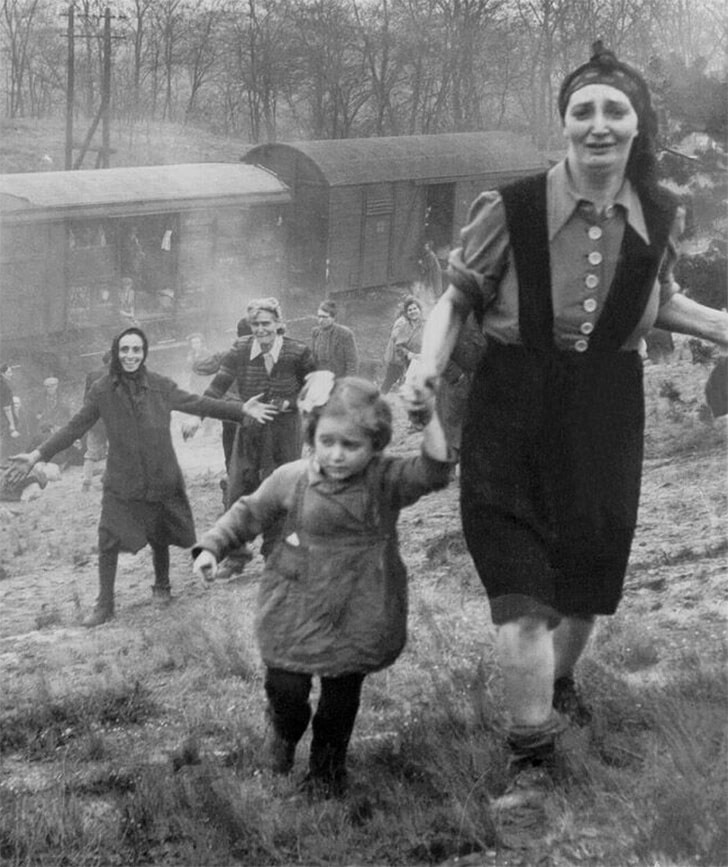
U.S. troops liberated the train on April 13, 1945, after it left Bergen-Belsen with about 2,500 prisoners. Major Clarence L. Benjamin photographed the moment survivors first saw American soldiers and tanks. The image remains one of World War II’s most powerful records of liberation, survival, and disbelief. It captures the moment freedom arrives before anyone in the frame could fully process what comes next.
Love That Crossed a Wall
In the Netherlands in 1888, this moving scene shows the graves of a Catholic woman and her Protestant husband. A brick wall separates their burial plots, yet their hands meet above it in a carved clasp. The monument is a vivid reminder of an era when religious divisions shaped social life and even determined how people were laid to rest.
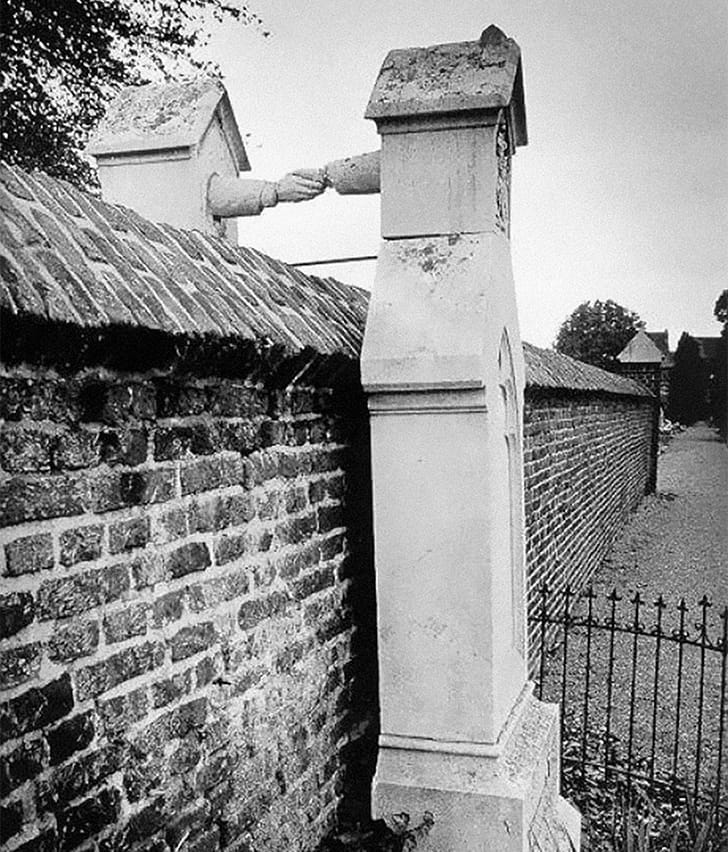
In 19th-century Europe, religious prejudice was widespread. Marriages between different denominations were often discouraged, and rigid expectations were closely enforced. Even so, this memorial stands as a clear statement of their enduring connection, suggesting that devotion can reach across boundaries that society insists on keeping in place.
A Lone, Quiet Stand Against a Crowd of Obedience
In Germany in 1936, a crowd lifts its arms in the Nazi salute. In the middle of it, one man keeps his arms folded, offering a wordless refusal to go along with the regime. In a totalitarian state like Nazi Germany, where dissent could carry deadly consequences, that small, still gesture reads as unusually bold.
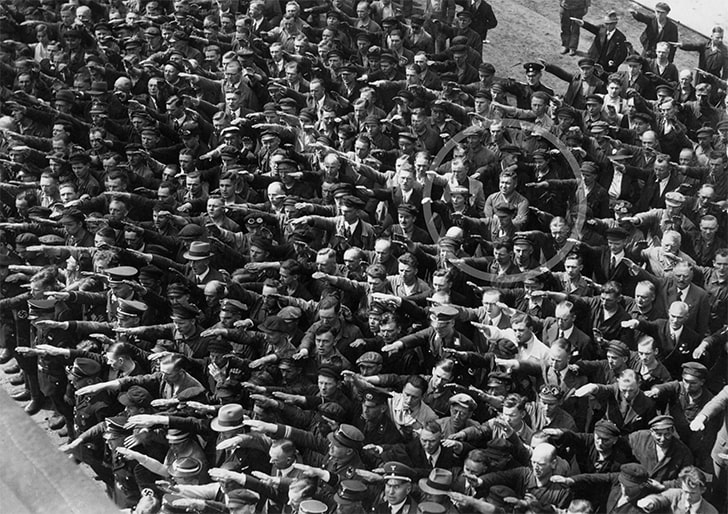
Adolf Hitler’s Nazi government controlled Germany from 1933 to 1945, an era defined by harsh authoritarian rule, systematic persecution, and the devastation of World War II. The man in the photograph has never been definitively identified, but his quiet stance has endured as a reminder of how individual resistance can persist, even under tyranny.
Hearing Sound for the First Time
This striking 1974 photograph freezes the instant Harold Whittles hears sound for the first time. His wide-eyed reaction follows the work of Dr. Jack Bradley, who fitted him with a hearing aid. Deaf since birth, Harold had spent five years without hearing before finally encountering the world of sound.
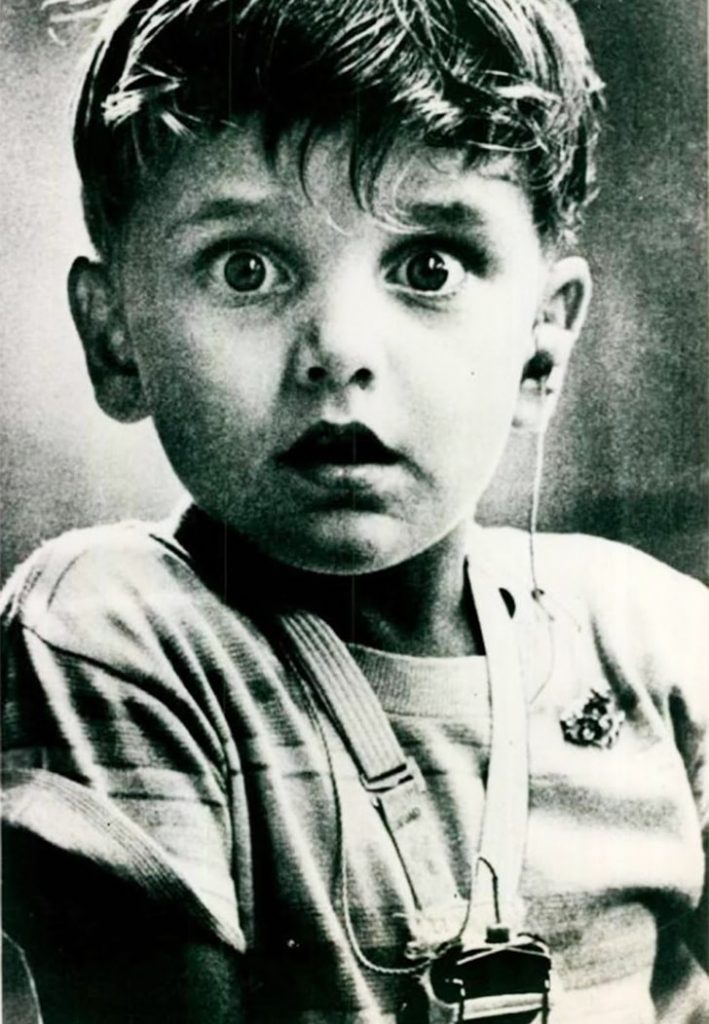
Consider what it means to hear your own voice, a friend’s laughter, or the steady background noise of daily life for the first time. In the 1970s, hearing aids represented a major step forward, and Harold’s experience highlights how medical technology can change a person’s life.
Just One Job, Thanks
In 1930, looking for work was a very different kind of challenge. Consider this man: he had three trades, spoke three languages, served for three years, had three children, and had been out of work for three months. His answer was simple and direct; he wore a sign on his back listing his skills. It was job hunting at its most literal.
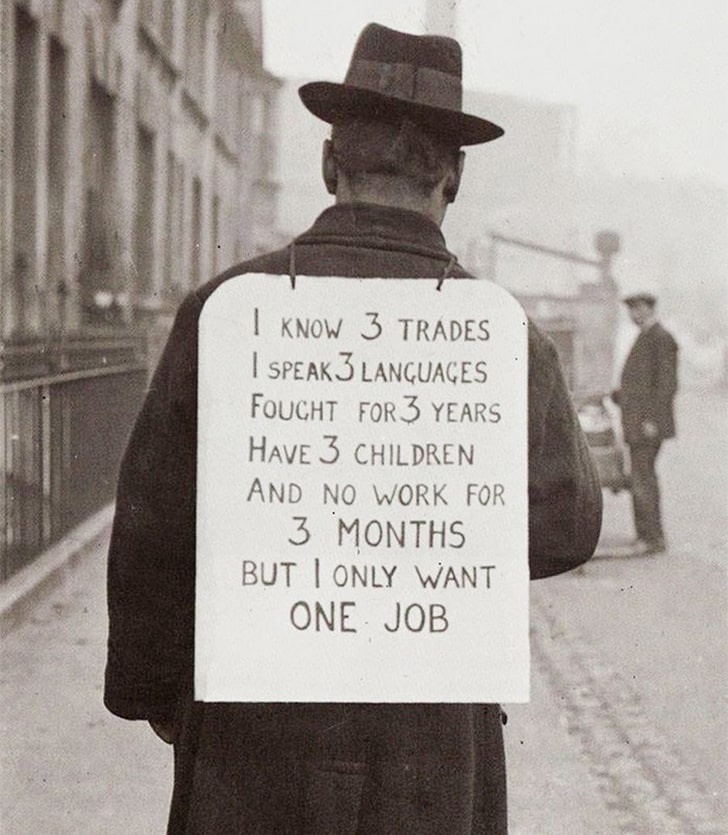
Today’s job seekers can rely on LinkedIn, online resumes, and endless job boards. At the start of the Great Depression, there was no such safety net, so people improvised. His handwritten “proposal letter” captures just how far someone might go to get hired.
The Day Sweden Switched Sides on the Road
Sweden’s streets looked briefly scrambled on September 3, 1967, when the country changed from driving on the left to driving on the right. The event became known as Dagen H, or H Day, and required months of planning, public notices, signs, and traffic controls.
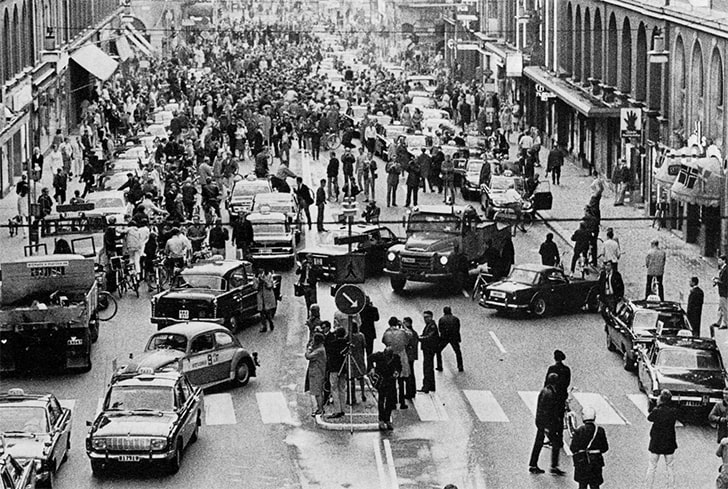
The photo captures the changeover itself as drivers, cyclists, and pedestrians adjust to a new national habit in real time. Despite fears of disaster, the transition went better than expected, with only minor early incidents reported and no deaths during the changeover. The image turns a practical traffic reform into a strangely fascinating historical scene.
When the Reality Hit
Taken in 1945, this stark photograph shows Nazi soldiers reacting as they are confronted with evidence of the crimes committed in concentration camps. Their expressions register shock and disbelief as the scale of what the regime had concealed becomes impossible to ignore.
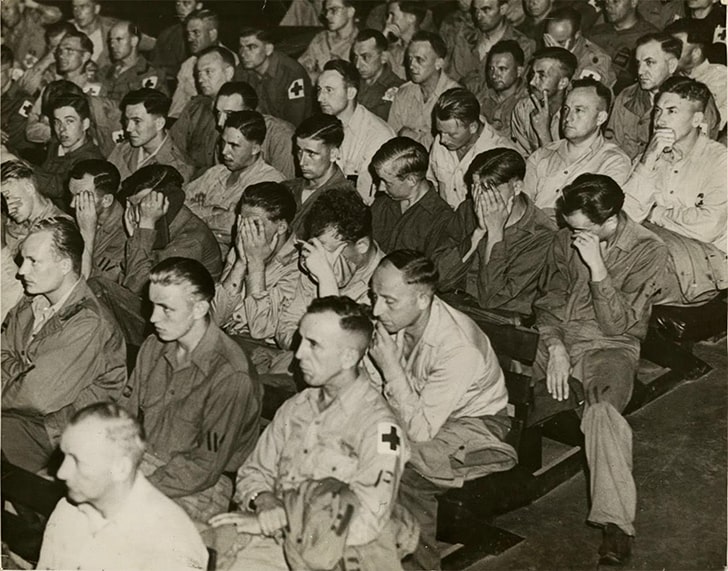
From 1941 to 1945, more than six million Jews were murdered as part of the Holocaust, along with hundreds of thousands of other victims, including Roma, gay people, and political opponents. Across Nazi-occupied Europe, roughly 40,000 camps and ghettos were created during this period.